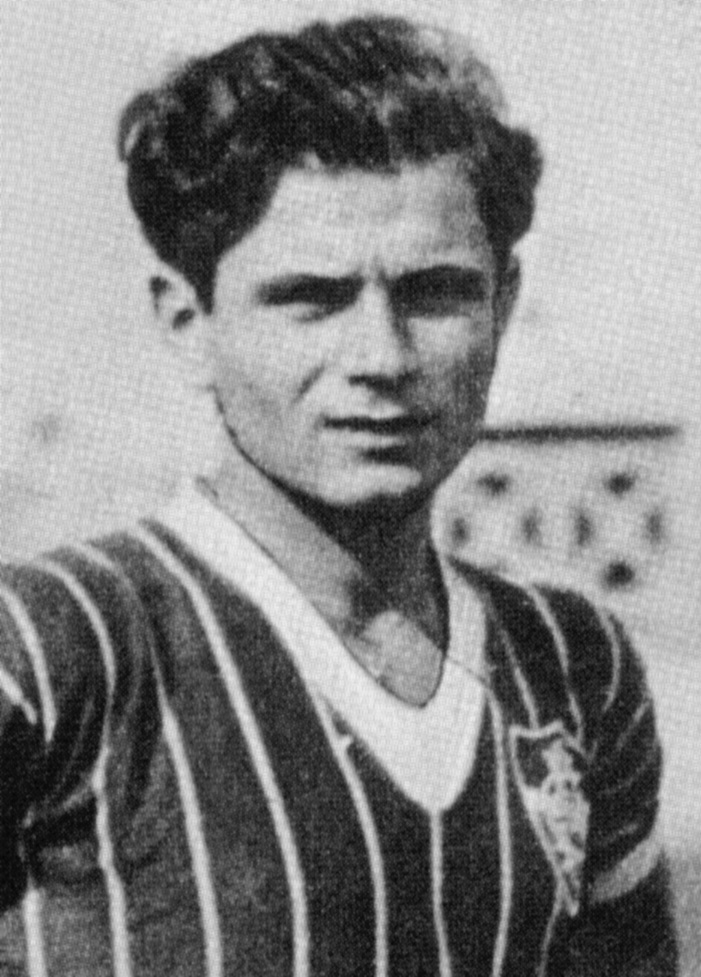
Preguinho
 Germany
association football player•volleyball player•beach volleyball player
Also known as: João Coelho Neto
วันเกิด
February 8, 1905
ราศี
Aquarius
สถานที่เกิด
Rio de Janeiro, Brazil
อายุ
เสียชีวิตเมื่ออายุ 74 ปี
ส่วนสูง
5 ft 9½ in (1.76 m)
เกี่ยวกับ
Preguinho, born João Coelho Neto, was a Brazilian footballer remembered as the first captain and first goal scorer for Brazil at a FIFA World Cup. Playing his entire senior career for Fluminense, he scored 184 goals across all competitions and helped the club win multiple trophies. His versatility extended beyond football: he competed in at least ten sports, including volleyball and swimming. Preguinho remains a symbol of early Brazilian football and a one-club legend, honored with a statue by Fluminense.
ชีวิตช่วงต้นและภูมิหลัง
บิดาของ Preguinho นักเขียน Coelho Neto ได้ลงทะเบียนบุตรชายที่ยังไม่เกิดเป็นสมาชิกของ Fluminense ขณะที่มารดายังตั้งครรภ์ เติบโตในรีโอเดจาเนโร เขาซึมซับทั้งวรรณกรรมและกีฬา ชื่อเล่นของเขามาจากเหตุการณ์ในวัยเด็ก: เมื่ออายุห้าขวบ บิดาโยนเขาลงสระว่ายน้ำ และเขาจมลงเหมือนตะปู (prego) ถึงกระนั้น เขากลายเป็นนักว่ายน้ำที่ยอดเยี่ยมและแข่งขันกีฬาหลายประเภทก่อนที่จะมุ่งเน้นฟุตบอล เขาลงเล่นชุดใหญ่ให้ Fluminense ครั้งแรกในปี 1925
ความก้าวหน้าในอาชีพ
Preguinho เล่นให้ Fluminense ตั้งแต่ปี 1925 ถึง 1938 ลงเล่นในลีก 174 นัด ทำได้ 129 ประตูในลีก เขาเป็นกัปตันทีมชาติบราซิลในฟุตบอลโลกครั้งแรกปี 1930 ที่อุรุกวัย ในนัดแรกของบราซิลกับยูโกสลาเวียเมื่อวันที่ 14 กรกฎาคม 1930 เขาทำประตูแรกในฟุตบอลโลกของบราซิล เขาทำอีกสองประตูในชัยชนะ 4-0 เหนือโบลิเวีย ทีมชาติบราซิลอ่อนแอลงเนื่องจากข้อพิพาทระหว่างสหพันธ์ฟุตบอลรีโอและเซาเปาโล แต่ Preguinho นำทีมอย่างโดดเด่น เขาเกษียณในปี 1938 หลังจากอาชีพ 14 ปีกับ Fluminense
ไทม์ไลน์อาชีพ
ภาพลักษณ์สาธารณะและสไตล์
Preguinho ถูกจดจำในฐานะผู้บุกเบิกในประวัติศาสตร์ฟุตบอลบราซิล ได้รับการยกย่องในความภักดีต่อ Fluminense และบทบาทของเขาในการรณรงค์ฟุตบอลโลกครั้งแรกของบราซิล ความสามารถหลากหลายของเขาในฐานะนักกีฬาสิบประเภทเพิ่มตำนานของเขา แฟนๆ และนักประวัติศาสตร์มองว่าเขาเป็นสัญลักษณ์ของยุคโรแมนติกของฟุตบอลบราซิล เขาได้รับเกียรติด้วยรูปปั้นที่ Fluminense และยังคงปรากฏในย้อนหลังของ FIFA ไม่มีชื่อแฟนด้อมอย่างเป็นทางการที่บันทึกไว้
ชื่อเสียงและแฟนด้อม (iFAMOUS Rankings)
The statue at Fluminense stands as a silent reflection of a man who once carried the weight of a nation's first World Cup dream. Preguinho remains an icon of early Brazilian football, yet in the vast machinery of modern fame metrics, he currently holds no placement in the published Global Top 1,000 or any Top-100 scope list. The iFANN Global Fame Engine evaluated his standing in August 2026 and determined that while his historical footprint is massive, he does not currently register a specific numeric rank among the world's most famous living or recently deceased figures. This absence reflects the nature of his legacy: preserved in institutional reverence rather than active, algorithmic consumption signals worldwide. There is no formal name for his fanbase, nor are there organized campaigns or digital rituals driving his visibility today. His audience exists primarily through the lens of historians and club loyalists who remember the ten-sport athlete who scored Brazil's opening goal in 1930. While the global stage moves on to new stars, Preguinho's story persists in the quiet corners of sports history, honored by Fluminense but lacking the structured fandom found with contemporary celebrities. He is a figure of the past, remembered for his loyalty and versatility, but his name does not currently appear in the rankings that track current global attention.
เรื่องน่าสนใจและตำนาน
Preguinho was registered as a Fluminense member before he was even born, a detail that underscores his deep roots in the club. His father, Coelho Neto, coined Rio de Janeiro's nickname "A Cidade Maravilhosa." During the 1930 World Cup, Brazil's team carried a Uruguayan flag in their opening match to win crowd support, a strategic move during the tournament where Preguinho scored four goals in three appearances. A television documentary about his life was produced by Carlos Niemeyer for Canal 100. Beyond football, he competed in at least ten sports, including beach volleyball, winning championships in eight of them. One legendary moment from his career occurred on July 20, 1930, when he scored the first goal of the game for Brazil against Bolivia, a victory that ended 4-0 and marked the first time a Brazilian player scored in a World Cup tournament. This event serves as the primary story told to newcomers about his legendary status. Historical interviews from 1977 detail his deep connection to the club's origins, reinforcing his role as a guardian of the club's history.
คำพูดที่โดดเด่น
“I loved Fluminense for as long as I can remember. I couldn't speak properly and Fluminense was in my soul, my heart and my body.”
ครอบครัวและชีวิตส่วนตัว
Preguinho เป็นบุตรของนักเขียนชื่อดัง Coelho Neto และ Maria ภรรยาของเขา บิดาเป็นสมาชิกของชนชั้นนำทางวรรณกรรมในรีโอและเป็นแฟนตัวยงของ Fluminense ตั้งแต่แรกเริ่ม Preguinho มีพี่ชายชื่อ Mano ซึ่งถูกคาดหวังให้เดินตามเส้นทางวรรณกรรม Preguinho แต่งงานและมีบุตร แม้รายละเอียดจะยังคงเป็นส่วนตัว เขาอาศัยอยู่ในรีโอเดจาเนโรตลอดชีวิต
ความเชื่อมโยงที่โดดเด่น
ความสัมพันธ์และประวัติการคบหา
บันทึกสาธารณะเกี่ยวกับความสัมพันธ์โรแมนติกของ Preguinho มีน้อย เขาแต่งงานและมีบุตร แม้ชื่อภรรยาและวันที่แต่งงานจะไม่ถูกบันทึกอย่างกว้างขวาง เขาเสียชีวิตเมื่อวันที่ 1 ตุลาคม 1979 ในรีโอเดจาเนโร ณ ปี 2026 เขาเสียชีวิตแล้ว สถานภาพสมรสเมื่อเสียชีวิตคือแต่งงานแล้ว
- แต่งงานแล้วPreguinho แต่งงานและมีบุตร แต่รายละเอียดไม่ถูกบันทึกต่อสาธารณะ
การเสียชีวิตและผลที่ตามมา
เสียชีวิต
October 1, 1979 (อายุ 74 ปี)
สถานที่เสียชีวิต
Rio de Janeiro, Brazil
สาเหตุการเสียชีวิต
ไม่ทราบ
Fluminense Football Club honored the man who scored Brazil's first World Cup goal, cementing his status as an eighth all-time top scorer and one of its greatest idols long after the final whistle. Tributes emerged retrospectively in documentaries celebrating the legacy of João Coelho Neto, known universally as Preguinho, rather than through immediate fan vigils or chart surges that the limited media infrastructure of 1979 could not support. The athlete passed away on October 1, 1979, in Rio de Janeiro at the age of 74, marking the end of a life lived entirely within the city where he played his entire senior career for Fluminense.
His final public appearance occurred two years prior during a historic interview at the club's Laranjeiras stadium, where he discussed the institution's history before vanishing from the public eye until his death. Funeral details, including the burial site and notable attendees, were never made public, and no official program or eulogy text has been released to the general public. Posthumously, he remains celebrated for competing successfully in eight different sports modalities, earning him the title of "the greatest athlete in the world" in certain historical accounts.
มูลค่าทรัพย์สิน (มูลค่ามรดก)
รางวัลที่ได้รับ (1)
อาชีพของ Preguinho มาก่อนรางวัลฟุตบอลสมัยใหม่ เขาชนะ Torneio Início และถ้วยรางวัลอีก 6 รายการกับ Fluminense รางวัลส่วนบุคคลเช่น Ballon d'Or ยังไม่มีในยุคของเขา
00สโมสร
Fluminense
เป็นที่รู้จักจาก
First Brazilian to score in a FIFA World Cup
1930 · กองหน้า
Captain of Brazil at 1930 World Cup
1930 · กัปตัน
One-club career with Fluminense
1925–1938 · กองหน้า
คำสำคัญ
แหล่งที่มา
ข้อมูลโดยย่อ
- อาชีพ
- association football player, volleyball player, beach volleyball player
- เกิด
- +1905-02-08
- สถานที่เกิด
- Rio de Janeiro
- เสียชีวิต
- +1979-10-01
- สถานที่เสียชีวิต
- Rio de Janeiro
- เพศ
- ชาย
- ราศี
- Aquarius
ข้อมูลส่วนตัว
- ชื่อเต็ม
- João Coelho Neto
- ส่วนสูง
- 5 ft 9½ in (1.76 m)
- การศึกษา
- Local schools in Rio de Janeiro
คำถามที่พบบ่อย
Preguinho ได้ชื่อเล่นมาอย่างไร?
Preguinho เป็นชาวบราซิลคนแรกที่ทำประตูในฟุตบอลโลกหรือไม่?
Preguinho ยิงประตูให้บราซิลได้กี่ประตู?
Preguinho เล่นตำแหน่งอะไร?
Preguinho เล่นกีฬากี่ประเภท?
เข้าร่วมชุมชน
แฟนกำลังพูดคุย