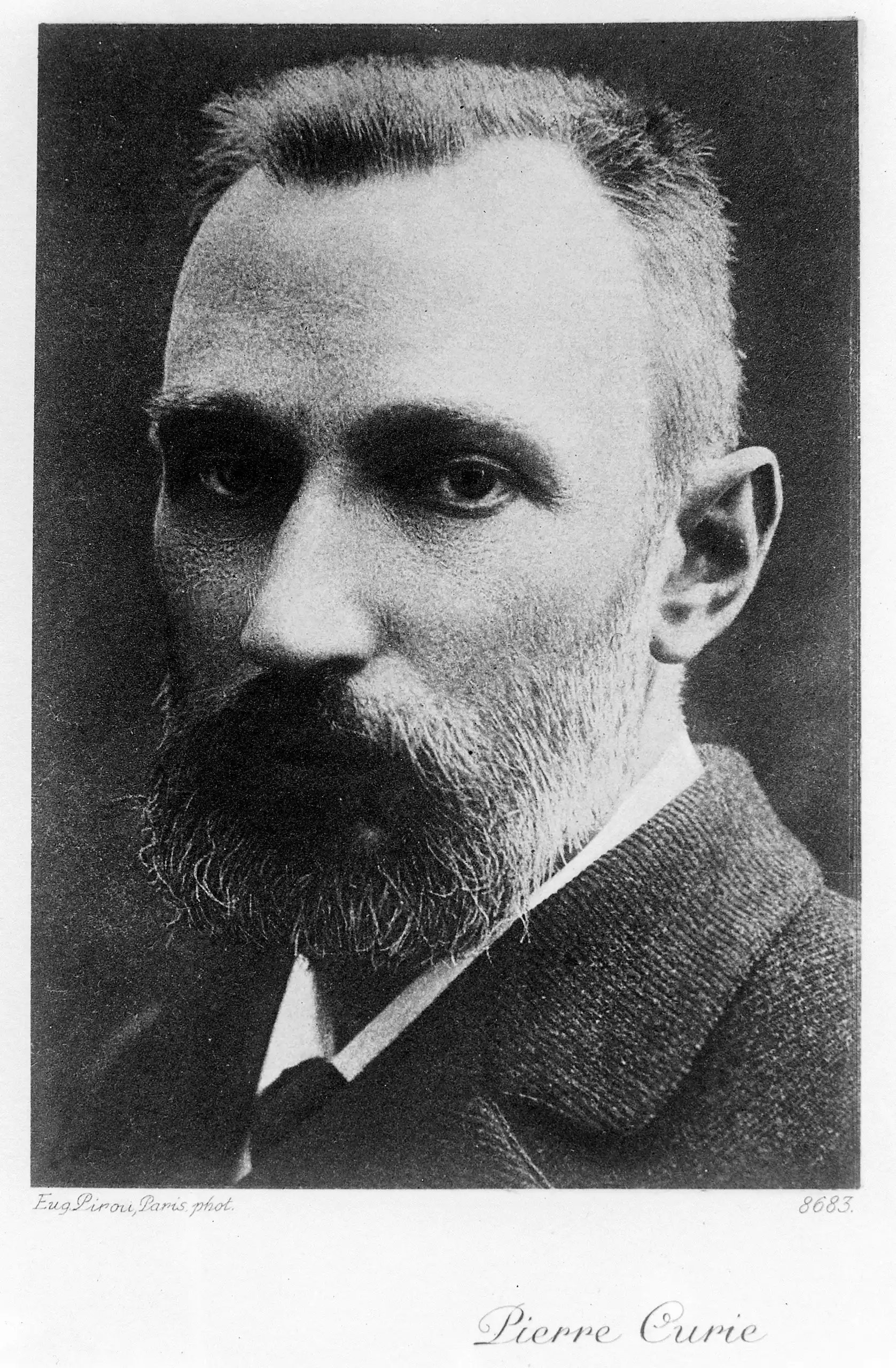
Pierre Curie
 France
physicist•chemist•university teacher
วันเกิด
May 15, 1859
ราศี
Taurus
สถานที่เกิด
Paris, France
อายุ
เสียชีวิตเมื่ออายุ 46 ปี
ส่วนสูง
5 ft 7 in (170 cm)
เกี่ยวกับ
ปิแอร์ กูรี เป็นนักฟิสิกส์และนักเคมีชาวฝรั่งเศสที่เปลี่ยนแปลงวงการวิทยาศาสตร์สมัยใหม่ เขาร่วมกับมารี กูรี ภรรยา บุกเบิกการศึกษากัมมันตภาพรังสี ค้นพบธาตุพอโลเนียมและเรเดียม ผลงานร่วมกันของพวกเขาทำให้ได้รับรางวัลโนเบลสาขาฟิสิกส์ในปี ค.ศ. 1903 ทำให้กูรีเป็นคู่สามีภรรยาคู่แรกที่ได้รับรางวัลโนเบล การค้นพบก่อนหน้านี้ของปิแอร์ในด้านผลึกศาสตร์และแม่เหล็ก รวมถึงปรากฏการณ์เพียโซอิเล็กทริกและกฎของกูรี ยังคงเป็นพื้นฐาน ปัจจุบันชื่อกูรีปรากฏบนสถาบัน มหาวิทยาลัย และแม้แต่หน่วยวัดกัมมันตภาพรังสี ความเฉลียวฉลาดอันเงียบสงบและการอุทิศตนอย่างไม่เห็นแก่ตัวต่อวิทยาศาสตร์เปิดของปิแอร์ยังคงเป็นแรงบันดาลใจให้นักฟิสิกส์และนักเคมีทั่วโลก
ชีวิตช่วงต้นและภูมิหลัง
ปิแอร์ กูรี เกิดที่ปารีสเมื่อวันที่ 15 พฤษภาคม ค.ศ. 1859 เป็นบุตรของเออแฌน กูรี แพทย์ และโซฟี-แคลร์ เดอปูยี บิดาซึ่งเป็นแพทย์หัวเสรีที่มีความหลงใหลในวิทยาศาสตร์ สอนหนังสือปิแอร์ที่บ้านจนอายุ 14 ปี หล่อเลี้ยงความสนใจในคณิตศาสตร์และเรขาคณิตตั้งแต่วัยเด็ก เมื่ออายุ 16 ปี ปิแอร์ได้รับปริญญาวิทยาศาสตรบัณฑิตจากซอร์บอนน์ เมื่ออายุ 18 ปี เขาเป็นผู้ช่วยห้องปฏิบัติการ และเมื่ออายุ 19 ปี เป็นผู้สาธิตและอาจารย์ จุดเปลี่ยนเกิดขึ้นในปี ค.ศ. 1880 เมื่อเขาค้นพบปรากฏการณ์เพียโซอิเล็กทริกกับฌัก พี่ชาย ซึ่งเป็นการเกิดประจุไฟฟ้าจากความเค้นเชิงกล การค้นพบครั้งนี้ในห้องปฏิบัติการเล็กๆ ต่อมาได้ทำให้เกิดนาฬิกาควอตซ์ ไมโครโฟน และการถ่ายภาพด้วยคลื่นเสียงความถี่สูง วิทยานิพนธ์ระดับปริญญาเอกของปิแอร์เรื่องแม่เหล็ก ซึ่งเสร็จในปี ค.ศ. 1895 ได้นำเสนอกฎของกูรีที่อธิบายพฤติกรรมของวัสดุแม่เหล็กกับอุณหภูมิ ความสำเร็จในช่วงแรกนี้ทำให้เขาเป็นดาวรุ่งในวงการฟิสิกส์ฝรั่งเศสก่อนที่จะพบมารี
ความก้าวหน้าในอาชีพ
อาชีพของปิแอร์ก้าวกระโดดหลังจากแต่งงานกับมารี สโกวอดอฟสกา ในปี ค.ศ. 1895 พวกเขาร่วมกันตรวจสอบรังสีลึกลับจากยูเรเนียมของอ็องรี แบ็กแรล ในเดือนกรกฎาคม ค.ศ. 1898 พวกเขาประกาศการค้นพบพอโลเนียม ซึ่งตั้งชื่อตามบ้านเกิดของมารี ภายในเดือนธันวาคม พวกเขาก็แยกเรเดียมได้ ซึ่งเป็นสารที่มีกัมมันตภาพรังสีมากกว่ายูเรเนียมหลายพันเท่า งานของพวกเขาซึ่งทำในเพิงที่มีลมโกรก ต้องแปรรูปสินแร่พิทช์เบลนด์เป็นตัน ในปี ค.ศ. 1903 รางวัลโนเบลสาขาฟิสิกส์ตกเป็นของปิแอร์ มารี และแบ็กแรล ปิแอร์ยังมีส่วนร่วมสำคัญในด้านแม่เหล็ก โดยนิยามอุณหภูมิกูรี ซึ่งเป็นจุดที่เฟอร์โรแมกเน็ตสูญเสียสภาพแม่เหล็กถาวร ในปี ค.ศ. 1904 ซอร์บอนน์ได้สร้างตำแหน่งศาสตราจารย์ด้านฟิสิกส์ให้เขา การที่เขาปฏิเสธที่จะจดสิทธิบัตรกระบวนการแยกเรเดียม โดยเชื่อว่าวิทยาศาสตร์ควรเป็นประโยชน์ต่อทุกคน ทำให้มรดกของเขาเป็นที่จดจำในฐานะนักวิจัยที่มีหลักการ
ไทม์ไลน์อาชีพ
ภาพลักษณ์สาธารณะและสไตล์
ปิแอร์ กูรี เป็นที่จดจำในฐานะต้นแบบของนักวิทยาศาสตร์ผู้ไม่เห็นแก่ตัว: เงียบขรึม มีหลักการ และอุทิศตนเพื่อการค้นพบ ในภาพถ่ายประวัติศาสตร์ เขาปรากฏตัวด้วยเคราเข้มและเสื้อคลุมยาว มักมองไปทางอื่นอย่างครุ่นคิด การนำเสนอในสื่อเน้นความร่วมมือกับมารี โดยพรรณนาถึงเขาเป็นคู่หูที่สุขุมและครุ่นคิด ตรงข้ามกับความมุ่งมั่นที่ร้อนแรงของเธอ ในหมู่ผู้ชื่นชอบวิทยาศาสตร์ เขาได้รับการเคารพในผลงานพื้นฐานด้านผลึกศาสตร์และแม่เหล็ก ไม่มีชื่อแฟนคลับอย่างเป็นทางการ แต่แฟนๆ มักเรียกตัวเองว่า "คูรี-อิสต์" พิพิธภัณฑ์กูรีในปารีส ซึ่งตั้งอยู่ในห้องปฏิบัติการเดิมของพวกเขา ดึงดูดนักท่องเที่ยวหลายพันคนต่อปีที่มาเยี่ยมชมสถานที่ที่สร้างประวัติศาสตร์
ชื่อเสียงและแฟนด้อม
The reverence for Pierre Curie exists not in crowded conventions or viral hashtags, but in the quiet hum of laboratories and the pages of textbooks where his name anchors the laws of magnetism. There is no organized fanbase with a specific moniker, no merchandise lines, and no social media campaigns dedicated to keeping his memory alive in the way modern pop culture demands. His admirers are scientists, historians, and students who engage with his legacy through rigorous study rather than performative celebration. The cultural mythology surrounding him is built on verified historical weight: the tragic accident that ended his life at age 46, the radioactive glow of his personal notebooks which remain dangerous over a century later, and the collaborative brilliance he shared with Marie. These stories are retold not as folklore, but as foundational lessons in scientific integrity and the human cost of discovery. While figures like rock stars generate chart-topping noise, Curie's impact is measured in Nobel Prizes, university namesakes, and the enduring utility of his discoveries in medical imaging. He remains a figure of profound respect within the academic world, revered for his refusal to patent radium and his dedication to open science. Despite this global recognition, iFANN's Global Fame Engine has evaluated this person, but they do not currently hold a placement in the published rankings (Global Top 1,000 or a Top-100 scope list).
เรื่องน่าสนใจและตำนาน
Pierre Curie's first major discovery, piezoelectricity, powers quartz watches and ultrasound machines today. He was so absorbed in his work that Marie often had to remind him to eat. A deeply contemplative man, he preferred long walks in the countryside over social gatherings. He refused to patent radium extraction, stating it would be "contrary to the scientific spirit." His death was instantaneous, struck by a horse-drawn carriage while crossing a rainy Paris street. A rare manuscript on polonium discovery sold at auction for €1.2 million in 2025. Historical accounts describe how the Curies investigated the medium Eusapia Palladino around 1903, debunking her supernatural claims through rigorous experimentation. This episode highlights their skepticism even as they explored the unknown nature of radiation. Another enduring fact involves his personal belongings; his notebooks and furniture remain highly radioactive more than 120 years later, stored in lead-lined boxes at French institutions. The story of his accidental death remains a central point of remembrance, often cited on anniversaries by organizations like the Nobel Prize Foundation.
คำพูดที่โดดเด่น
“One never notices what has been done; one can only see what remains to be done.”
“I am among those who think, like Nobel, that humanity will draw more good than evil from new discoveries.”
“It is my earnest desire that the discovery of radium should benefit humanity, and especially its medical applications.”
“We must eat, drink, sleep, be idle, love, and touch life in all its parts, and yet, in all of this, the work must remain the master.”
ครอบครัวและชีวิตส่วนตัว
เออแฌน กูรี บิดาของปิแอร์ เป็นแพทย์ที่รักษาคนจนและปลูกฝังความรักวิทยาศาสตร์ให้กับลูกชาย โซฟี-แคลร์ มารดา ดูแลบ้าน ฌัก พี่ชายของปิแอร์ ร่วมค้นพบเพียโซอิเล็กทริกซิตีกับเขา ในปี ค.ศ. 1895 ปิแอร์แต่งงานกับมารี สโกวอดอฟสกา นักฟิสิกส์ชาวโปแลนด์ผู้ชาญฉลาด ความร่วมมือของพวกเขาทั้งโรแมนติกและทางวิทยาศาสตร์ พวกเขาทำงานเคียงบ่าเคียงไหล่ในห้องปฏิบัติการ มีลูกสาวสองคน: อีแรน เกิด ค.ศ. 1897 ซึ่งต่อมาได้รับรางวัลโนเบลสาขาเคมีร่วมกับเฟรเดริก โจลีโย-กูรี สามี และเอฟ เกิด ค.ศ. 1904 ซึ่งเป็นนักเขียนและนักการทูต ครอบครัวใช้ชีวิตอย่างเรียบง่ายในปารีส มักประสบปัญหาทางการเงินแม้จะมีชื่อเสียงเพิ่มขึ้น
ความเชื่อมโยงที่โดดเด่น
ผู้ร่วมงานที่ใกล้ชิดที่สุดของปิแอร์คือมารี กูรี ภรรยา ฌัก พี่ชายของเขาร่วมค้นพบเพียโซอิเล็กทริกซิตี การค้นพบกัมมันตภาพรังสีธรรมชาติของอ็องรี แบ็กแรลเป็นพื้นฐานให้กับงานของกูรี อีแรน โจลีโย-กูรี ลูกสาว และเฟรเดริก สามีของเธอ สืบทอดมรดกโนเบลของครอบครัว ปิแอร์เป็นที่ปรึกษาของปอล ลองฌแว็ง ซึ่งต่อมาเป็นนักฟิสิกส์ที่มีชื่อเสียงและเป็นบุคคลที่ถกเถียงในชีวิตของมารี กาบรีแยล ลิปมันน์ ที่ปรึกษาวิทยานิพนธ์ระดับปริญญาเอกของเขาก็ได้รับรางวัลโนเบลเช่นกัน
ความสัมพันธ์และประวัติการคบหา
ประวัติความรักของ Pierre Curie ถูกกำหนดโดยความสัมพันธ์ที่ลึกซึ้งเพียงหนึ่งเดียว เขาพบกับ Marie Sklodowska ในปี 1894 ผ่านเพื่อนร่วมงาน Józef Wierusz-Kowalski นักฟิสิกส์ชาวโปแลนด์ Pierre หลงใหลในสติปัญญาและความหลงใหลในวิทยาศาสตร์ของเธอในทันที โดยขอแต่งงานในจดหมาย พวกเขาแต่งงานกันเมื่อวันที่ 26 กรกฎาคม 1895 ความสัมพันธ์ของพวกเขาเป็นหุ้นส่วนที่ร่วมมือและเปี่ยมด้วยความรัก พวกเขาทำงานเคียงบ่าเคียงไหล่ในโรงเก็บของที่โปร่งลม เพื่อแยกเรเดียมและพอโลเนียม พวกเขามีลูกสาวสองคนคือ Irène และ Ève การเสียชีวิตอย่างกะทันหันของ Pierre ในปี 1906 ทำให้ Marie เป็นม่าย ณ ปี 2026 Pierre เสียชีวิตแล้ว โดยเสียชีวิตขณะยังแต่งงานกับ Marie
- แต่งงานแล้วMarie Curie1895 - 1906แต่งงานตั้งแต่ปี 1895 จนถึงการเสียชีวิตของ Pierre ในปี 1906 มีลูกสาวสองคนและทำงานร่วมกันทางวิทยาศาสตร์
การเสียชีวิตและผลที่ตามมา
เสียชีวิต
April 19, 1906 (อายุ 46 ปี)
สถานที่เสียชีวิต
Paris, France
สาเหตุการเสียชีวิต
Trauma from horse-drawn carriage accident
Pierre Curie, the French physicist and chemist, died on April 19, 1906, in Paris, France. He was struck by a horse-drawn cart while crossing the Rue Dauphine near the Pont Neuf. The circumstances of his death were a tragic accident; he slipped on wet pavement and fell into the path of the vehicle. He was struck directly in the head by the wheel or the vehicle itself and died instantly. No disputed accounts regarding the cause or location of death appear in the search results. Tributes poured in from peers and institutions recognizing him as a pioneer in crystallography and magnetism and a co-discoverer of polonium and radium alongside his wife, Marie Curie.
His remains were interred in the Cimetière de Sceaux. Pierre Curie's legacy has been preserved through numerous honors, including the continued recognition of his 1903 Nobel Prize in Physics. A Franco-Polish "Marie Sklodowska Curie and Pierre Curie" Prize continues to be awarded. His belongings, along with those of Marie Curie, remain stored in lead-lined boxes due to their persistent radioactivity.
มูลค่าทรัพย์สิน (มูลค่ามรดก)
$10 Million
การประเมินโดยทีมบรรณาธิการ iFANN
Though Pierre Curie died in 1906 with a modest personal fortune, his financial legacy has grown into a substantial entity managed by the Curie family and the Institut Curie. The couple lived frugally throughout their careers, reinvesting their Nobel Prize winnings directly into research rather than accumulating wealth. Pierre's refusal to patent the radium extraction process ensured that scientific discoveries remained free for humanity, a decision that shaped the economic structure of their estate. Today, the value of the Curie name drives significant income through licensing agreements at the Institut Curie in Paris, a leading cancer research center that utilizes the brand for fundraising and grants. Per iFANN's editorial analysis, the estate is estimated to be worth $10 million as of 2026, generating revenue from published works and historical artifacts. A rare manuscript on polonium discovery sold at auction for €1.2 million in 2025, contributing to this total. The estate remains active, with letters and manuscripts continuing to attract collectors while the family preserves the intellectual property associated with the Curies' groundbreaking work.
รางวัลที่ได้รับ (4)
Pierre Curie ได้รับรางวัลโนเบลสาขาฟิสิกส์ในปี 1903 ร่วมกับ Marie Curie และ Henri Becquerel นอกจากนี้เขายังได้รับเหรียญ Davy (1903), เหรียญ Matteucci (1904) และเหรียญ Elliott Cresson (1905) เกียรติยศเหล่านี้ยอมรับงานพื้นฐานของเขาในด้านกัมมันตภาพรังสีและแม่เหล็กวิทยา
1905 · ฟิสิกส์
Discovery of radium
1904 · ฟิสิกส์
Research on magnetism
เป็นที่รู้จักจาก
Discovery of polonium
1898 · Co-discoverer
Discovery of radium
1898 · Co-discoverer
Piezoelectric effect
1880 · Co-discoverer
Curie's law of magnetism
1895 · Discoverer
Curie temperature
1895 · Discoverer
คำสำคัญ
ข้อมูลโดยย่อ
- อาชีพ
- physicist, chemist, university teacher
- เกิด
- May 15, 1859
- สถานที่เกิด
- Paris, France
- เสียชีวิต
- April 19, 1906
- สถานที่เสียชีวิต
- Paris, France
- เพศ
- ชาย
- คู่สมรส
- Marie Curie
- ราศี
- Taurus
ข้อมูลส่วนตัว
- ชื่อเต็ม
- Pierre Curie
- ส่วนสูง
- 5 ft 7 in (170 cm)
- คู่สมรส
- Marie Curie
- บุตร
- Irène Joliot-Curie, Ève Curie
- การศึกษา
- Bachelor of Science, Doctor of Science from the Sorbonne
คำถามที่พบบ่อย
การค้นพบที่มีชื่อเสียงที่สุดของ Pierre Curie คืออะไร?
Pierre Curie เสียชีวิตได้อย่างไร?
Pierre Curie เป็นผู้ชนะรางวัลโนเบลหรือไม่?
Pierre Curie มีลูกหรือไม่?
กฎของกูรีคืออะไร?
บุคคลที่คล้ายกัน
เข้าร่วมชุมชน
แฟนกำลังพูดคุย