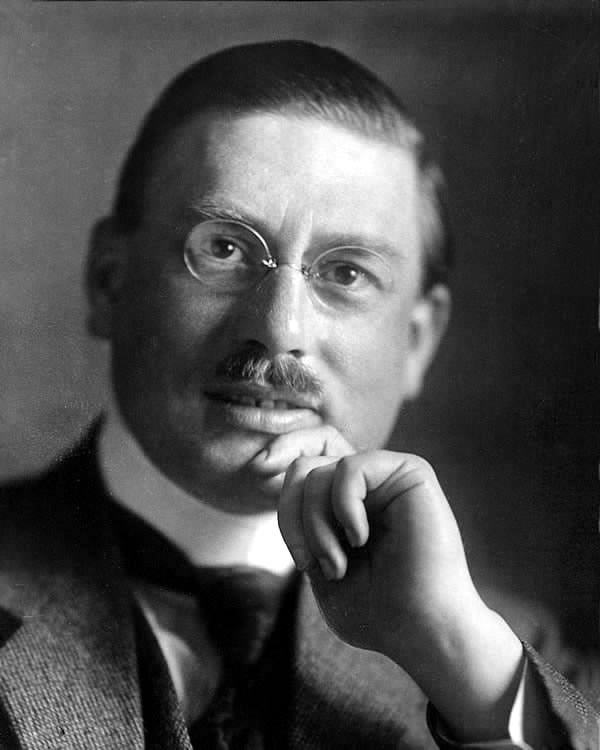
Peter Debye
 Netherlands
Also known as: Petrus Josephus Wilhelmus Debije
วันเกิด
March 24, 1884
ราศี
Aries
สถานที่เกิด
Maastricht, Netherlands
อายุ
เสียชีวิตเมื่ออายุ 82 ปี
ส่วนสูง
5 ft 10 in (178 cm)
เกี่ยวกับ
Peter Joseph William Debye เป็นนักฟิสิกส์และนักเคมีเชิงฟิสิกส์ชาวดัตช์-อเมริกัน ผู้เปลี่ยนแปลงวิทยาศาสตร์โมเลกุลในช่วงต้นศตวรรษที่ 20 เขาเป็นที่รู้จักมากที่สุดจากแบบจำลองเดอบายของความร้อนจำเพาะ ทฤษฎีเดอบาย-ฮึคเคิลของสารละลายอิเล็กโทรไลต์ และผลงานเกี่ยวกับโมเมนต์ไดโพลของโมเลกุล เขาได้รับรางวัลโนเบลสาขาเคมีในปี 1936 แบบจำลองทางคณิตศาสตร์อันสง่างามของเดอบายเชื่อมโยงฟิสิกส์และเคมี ทำให้เกิดเครื่องมือสำหรับนักวิทยาศาสตร์ เช่น วิธีเดอบาย-เชอเรอร์สำหรับการเลี้ยวเบนรังสีเอกซ์ และแนวคิดของความยาวเดอบายที่ยังคงเป็นมาตรฐานจนทุกวันนี้ หลังจากอพยพไปสหรัฐอเมริกาในปี 1940 เขาใช้เวลาหลายทศวรรษที่มหาวิทยาลัยคอร์เนลล์ ซึ่งเขาเป็นหัวหน้าภาควิชาเคมีและให้คำปรึกษาแก่ผู้วิจัยรุ่นใหม่ แฟนๆ ของประวัติศาสตร์วิทยาศาสตร์จดจำเขาในฐานะนักทฤษฎีผู้เคร่งครัดที่ถามคำถามถูกต้อง และชื่อของเขายังคงอยู่ในหน่วย ค่าคงที่ และสถาบันต่างๆ ทั่วโลก
ชีวิตช่วงต้นและภูมิหลัง
เดอบายเติบโตในเมืองมาสทริชต์ เป็นบุตรคนโตจากพี่น้องห้าคนในครอบครัวคาทอลิก พ่อของเขาทำงานเป็นหัวหน้าคนงานในโรงงานโลหะ ครอบครัวมีฐานะปานกลางแต่สนับสนุนความอยากรู้อยากเห็นทางปัญญา ที่โรงเรียน Hogere Burgerschool เดอบายมีความสามารถพิเศษด้านคณิตศาสตร์และวิทยาศาสตร์ และหลังจากอ่านผลงานของ James Clerk Maxwell และ Ludwig Boltzmann เขาก็ตั้งเป้าหมายที่จะเรียนฟิสิกส์เชิงทฤษฎี เขาเข้าเรียนที่ RWTH Aachen ในปี 1901 เพื่อศึกษาวิศวกรรมไฟฟ้า ซึ่งเขาได้ฟังบรรยายของนักฟิสิกส์ Arnold Sommerfeld Sommerfeld มองเห็นพรสวรรค์ของเดอบายและจ้างเขาเป็นผู้ช่วยในปี 1904 เมื่อ Sommerfeld ย้ายไปมหาวิทยาลัยมิวนิกในปี 1906 เดอบายก็ตามไป ที่นั่น เขาสำเร็จการศึกษาปริญญาเอกสาขาฟิสิกส์ในปี 1908 โดยเขียนวิทยานิพนธ์เกี่ยวกับความดันรังสีที่สร้างความประทับใจให้แม้แต่ Albert Einstein การสอบปากเปล่ากินเวลานานกว่าสามชั่วโมง ซึ่งเป็นเซสชันที่โหดเหี้ยมอย่างที่ Sommerfeld ใช้ทดสอบความลึกของเดอบาย
ความก้าวหน้าในอาชีพ
ในปี 1911 ตามคำแนะนำของ Einstein เดอบายสืบทอดตำแหน่งศาสตราจารย์ฟิสิกส์เชิงทฤษฎีต่อจาก Einstein ที่มหาวิทยาลัยซูริก ปีถัดมา เขาตีพิมพ์แบบจำลองเดอบายของความร้อนจำเพาะ ซึ่งปรับปรุงแบบจำลองของ Einstein โดยคำนึงถึงสเปกตรัมเต็มของการสั่นของแลตทิซ ในปีเดียวกันนั้น ร่วมกับ Paul Scherrer เขาได้พัฒนาวิธีเดอบาย-เชอเรอร์สำหรับการเลี้ยวเบนรังสีเอกซ์แบบผง ซึ่งยังคงใช้ในวิทยาศาสตร์วัสดุ เดอบายย้ายไปดำรงตำแหน่งศาสตราจารย์ที่ Utrecht, Göttingen, และ ETH Zurich และสร้างผลงานที่ก้าวหน้าอย่างต่อเนื่อง ในปี 1923 ร่วมกับ Erich Hückel เขาตีพิมพ์ทฤษฎีเดอบาย-ฮึคเคิลของสารละลายอิเล็กโทรไลต์ ซึ่งอธิบายพฤติกรรมของอิเล็กโทรไลต์แก่ เขายังแนะนำแนวคิดโมเมนต์ไดโพลไฟฟ้าถาวร ซึ่งกลายเป็นศูนย์กลางของเคมีโมเลกุล ในปี 1936 รางวัลโนเบลสาขาเคมียกย่องผลงานของเขาเกี่ยวกับโครงสร้างโมเลกุลโดยใช้โมเมนต์ไดโพลและการเลี้ยวเบน หลังจากเป็นผู้อำนวยการสถาบัน Kaiser Wilhelm ในเบอร์ลิน เขาอพยพไปสหรัฐอเมริกาในปี 1940 และเข้าร่วมมหาวิทยาลัยคอร์เนลล์ ซึ่งเขาเป็นหัวหน้าภาควิชาเคมีจนกระทั่งเกษียณในปี 1950
ไทม์ไลน์อาชีพ
ภาพลักษณ์สาธารณะและสไตล์
ภาพลักษณ์สาธารณะของเดอบายคือนักวิทยาศาสตร์ผู้พิถีพิถันและเคร่งครัดที่เชื่อมโยงฟิสิกส์และเคมีด้วยแบบจำลองทางคณิตศาสตร์อันสง่างาม สื่อนำเสนอเขาในฐานะนักทฤษฎีโมเลกุลผู้บุกเบิก แม้ว่ามรดกของเขาจะซับซ้อนจากการกระทำของเขาในยุคนาซี เขายังคงเป็นผู้อำนวยการสถาบัน Kaiser Wilhelm หลังปี 1933 และติดต่อกับเจ้าหน้าที่นาซี แม้ว่าเขาจะช่วยเพื่อนร่วมงานชาวยิวให้หนีรอดก็ตาม การสอบสวนในปี 2006 สรุปว่าเขาไม่ใช่นาซี แต่ไร้เดียงสาทางการเมือง ในหมู่นักวิทยาศาสตร์ เขาได้รับการเคารพในแบบจำลองเดอบาย ทฤษฎีเดอบาย-ฮึคเคิล และวิธีเดอบาย-เชอเรอร์ ลักษณะเด่นของเขาคือการหาสมการง่ายๆ ที่อธิบายปรากฏการณ์ซับซ้อน ไม่มีวัฒนธรรมแฟนดอม แต่ชื่อของเขายังคงอยู่ในความยาวเดอบาย อุณหภูมิเดอบาย และหน่วยดีไบ
ชื่อเสียงและแฟนด้อม (iFAMOUS Rankings)
Peter Debye currently holds no placement in the iFANN Global Top 1,000 or any scope-specific ranking lists. The iFANN Global Fame Engine evaluated his standing in August 2026 and determined he remains unranked, a status reflecting his historical distance rather than a lack of impact. While modern celebrities vie for chart positions through viral moments and streaming numbers, Debye exists in a different tier of fame, one measured in textbooks and laboratory protocols rather than search queries.
There is no formal fandom for the Dutch-American physicist. No fanbase organizes under a specific name to champion his legacy, nor do fans gather for rituals or campaigns. The community that keeps his memory alive consists of academic peers, students, and researchers who interact through professional channels like conferences and journals. Instead of fan clubs, the scientific world honors him with prestigious awards such as the Peter Debye Prize from the American Physical Society. His legend is defined not by crowds but by two distinct pillars: his monumental 1936 Nobel Prize-winning work on molecular structures and the dark historical controversy regarding his tenure during the Nazi era. In 2006, this scandal led to the stripping of his honors at several universities, cementing a complex legacy where brilliance and political compromise stand side by side. He remains a figure studied for his theories on dipole moments and magnetic cooling, remembered by those who understand the weight of his contributions to physical chemistry.
เรื่องน่าสนใจและตำนาน
Peter Debye originally bore the Dutch surname Debije, which he anglicized to Debye upon moving to Germany to suit local pronunciation habits. An accomplished musician, he frequently played chamber music on the violin and piano alongside his colleagues. The Debye-Scherrer X-ray diffraction method emerged accidentally when colleague Scherrer forgot to rotate a crystal sample during an experiment. Despite decades in America, Debye never formally became a U.S. citizen, retaining his Dutch nationality until his death. The unit for electric dipole moment, the Debye (D), bears his name. He maintained a close friendship with Albert Einstein, who recommended him for a professorship in Zurich. His doctoral oral exam with Arnold Sommerfeld famously lasted over three hours, a reflection of its difficulty.
His scientific mythology includes the formulation of magnetic cooling theory, a technique essential for reaching extreme temperatures in cryogenics. A darker chapter of his legend involves the investigation into his conduct as director of the Kaiser Wilhelm Institute, which resulted in the revocation of his honors due to perceived collaboration with the Nazi regime.
คำพูดที่โดดเด่น
“The scientist is not a person who gives the right answers; he is one who asks the right questions.”
“Science is not a collection of facts. It is a way of thinking.”
“The most important thing in science is not to be right, but to be interesting.”
ครอบครัวและชีวิตส่วนตัว
เดอบายแต่งงานกับ Mathilde Alberer เมื่อวันที่ 2 พฤษภาคม 1913 ในมิวนิก Mathilde เป็นลูกสาวของนักอุตสาหกรรมชาวบาวาเรีย และทั้งคู่พบกันผ่านเครือข่ายสังคมในมิวนิก พวกเขามีลูกสองคน: ลูกชายชื่อ Peter Paul Ruprecht Debye เกิดในปี 1916 ซึ่งต่อมาเป็นนักฟิสิกส์ และลูกสาวชื่อ Mathilde Maria Debye เกิดในปี 1921 ครอบครัวย้ายบ่อยครั้งในยุโรปตามตำแหน่งวิชาการของเดอบาย Mathilde เสียชีวิตในปี 1963 สามปีก่อนเดอบาย เขาไม่เคยแต่งงานใหม่ พ่อของเดอบายคือ Wilhelmus Debije เป็นหัวหน้าคนงานในโรงงานโลหะ แม่ของเขาคือ Maria Anna Barbara Ruemkens เขามีน้องอีกสี่คน
ความเชื่อมโยงที่โดดเด่น
เดอบายได้รับคำปรึกษาจาก Arnold Sommerfeld และเป็นเพื่อนสนิทของ Albert Einstein ซึ่งแนะนำเขาให้ดำรงตำแหน่งศาสตราจารย์ที่ซูริก เขาร่วมงานกับ Erich Hückel ในทฤษฎีเดอบาย-ฮึคเคิล และกับ Paul Scherrer ในการเลี้ยวเบนรังสีเอกซ์ ที่คอร์เนลล์ เขาทำงานร่วมกับ Lars Onsager เขายังติดต่อกับ Max Planck ในช่วงเวลาที่เขาอยู่ที่สถาบัน Kaiser Wilhelm
ความสัมพันธ์และประวัติการคบหา
Debye แต่งงานกับ Mathilde Alberer เมื่อวันที่ 2 พฤษภาคม 1913 ในเมืองมิวนิก เยอรมนี พวกเขาพบกันผ่านการเชื่อมต่อทางครอบครัวในวงสังคมของมิวนิก การแต่งงานดำเนินไปจนกระทั่ง Debye เสียชีวิตเมื่อวันที่ 2 พฤศจิกายน 1966 มีบุตรสองคนคือลูกชาย Peter Paul Ruprecht Debye (เกิด 1916) และลูกสาว Mathilde Maria Debye (เกิด 1921) Mathilde เสียชีวิตในปี 1963 ก่อน Debye ไม่มีการบันทึกความสัมพันธ์โรแมนติกอื่น ๆ ในปี 2026 Debye เสียชีวิตแล้วและเป็นม่าย
- แต่งงานแล้วMathilde Alberer1913 - 1966แต่งงานเมื่อวันที่ 2 พฤษภาคม 1913 ในมิวนิก มีบุตรสองคน เธอเสียชีวิตในปี 1963
การเสียชีวิตและผลที่ตามมา
เสียชีวิต
November 2, 1966 (อายุ 82 ปี)
สถานที่เสียชีวิต
Ithaca, New York
สาเหตุการเสียชีวิต
เสียชีวิตตามธรรมชาติจากความชรา
The Peter Debye Prize for Young Investigators, established to honor excellence in dielectric research, remains a living reflection of his scientific impact decades after his passing. In the years following his death, the academic community in Ithaca and beyond marked his loss with quiet tributes rather than public spectacle, acknowledging a man whose mathematical models had fundamentally reshaped molecular science. His final days passed without fanfare or controversy at his home in Ithaca, New York, where he had resided since emigrating from Europe in 1940. On November 2, 1966, the eighty-two-year-old physicist succumbed to natural causes associated with old age, ending a life that bridged the gap between physics and chemistry with elegant precision.
While no specific funeral details have been recorded in historical archives, the immediate reaction focused on the enduring utility of his theories, such as the Debye length and the diffraction method that bear his name. Decades later, the conversation around his legacy shifted when Dutch universities distanced themselves from him in 2006 due to new scrutiny regarding his Nazi-era affiliations, stripping certain honors and forcing a re-evaluation of his standing in his homeland. This complex posthumous history stands alongside the active awards named in his memory, ensuring his contributions remain subjects of study even as institutions grapple with the full scope of his past.
มูลค่าทรัพย์สิน (มูลค่ามรดก)
$1 Million
การประเมินโดยทีมบรรณาธิการ iFANN
As a historical figure who died in 1966, Peter Debye's net worth is not commercially tracked. During his career, he earned a professor's salary, estimated at $10,000 to $15,000 annually in the 1940s and 1950s, equivalent to roughly $150,000 to $200,000 today. His estate consists primarily of intellectual property from his scientific publications, which are now in the public domain and generate negligible royalties. The Debye name is used by the Debye Institute at Utrecht University and the Peter Debye Prize, but these do not produce revenue for the estate. Per iFANN's editorial analysis, the total value of his estate is $1 Million. As of 2026, no reliable public estimate of his estate value exists, and any figures above $1 million are speculative.
รางวัลที่ได้รับ (10)
Debye ได้รับรางวัลโนเบลสาขาเคมีในปี 1936 สำหรับงานโครงสร้างโมเลกุลโดยใช้โมเมนต์ไดโพลและการเลี้ยวเบน นอกจากนี้เขายังได้รับรางวัล Rumford Medal (1930), Lorentz Medal (1935), Franklin Medal (1937), Mendel Medal (1940), Willard Gibbs Award (1949), Max Planck Medal (1950), Priestley Medal (1963), Faraday Medal (1963) และ National Medal of Science (1965, มอบให้หลังเสียชีวิตในปี 1967)
1967 · วิทยาศาสตร์
Contributions to molecular structure
1963 · เคมี
Contributions to chemistry
เป็นที่รู้จักจาก
Debye model of specific heat
1912 · ผู้สร้าง
Debye-Scherrer method
1912 · ผู้ร่วมสร้างสรรค์
Debye-Huckel theory
1923 · ผู้ร่วมสร้างสรรค์
Molecular dipole moments
1923 · Introducer
Debye-Waller factor
1913 · ผู้มีส่วนร่วม
คำสำคัญ
ข้อมูลโดยย่อ
- อาชีพ
- physicist, physical chemist
- เกิด
- +1884-03-24
- สถานที่เกิด
- Maastricht, Netherlands
- เสียชีวิต
- +1966-11-02
- สถานที่เสียชีวิต
- Ithaca, New York
- เพศ
- ชาย
- คู่สมรส
- Mathilde Alberer
- ราศี
- Aries
ข้อมูลส่วนตัว
- ชื่อเต็ม
- Petrus Josephus Wilhelmus Debije
- ส่วนสูง
- 5 ft 10 in (178 cm)
- คู่สมรส
- Mathilde Alberer
- บุตร
- Peter Paul Ruprecht Debye, Mathilde Maria Debye
- การศึกษา
- RWTH Aachen (electrical engineering), University of Munich (PhD physics)
คำถามที่พบบ่อย
Peter Debye เป็นนาซีหรือไม่?
Peter Debye มีชื่อเสียงจากอะไร?
Peter Debye ได้รับรางวัลโนเบลหรือไม่?
หน่วย Debye คืออะไร?
Peter Debye เสียชีวิตเมื่ออายุเท่าไหร่?
เข้าร่วมชุมชน
แฟนกำลังพูดคุย