 United States
ภาพรวม
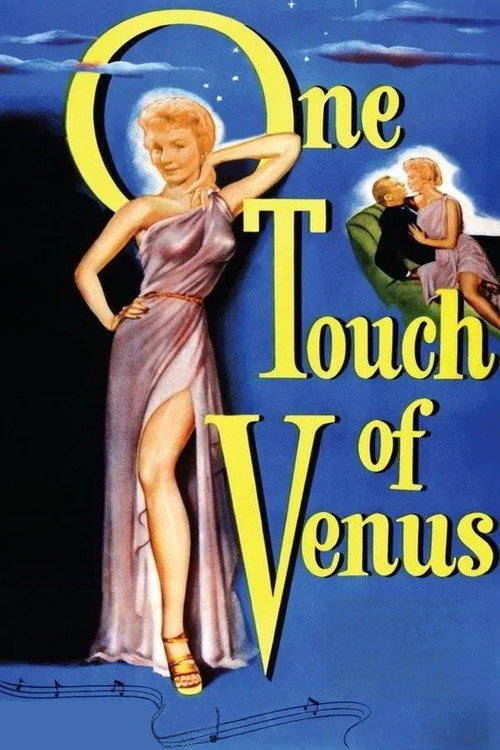
On August 27, 1955, NBC brought Kurt Weill's Broadway musical One Touch of Venus into living rooms across America via a live color broadcast. Directed by George Schaefer for the Producer's Showcase anthology series, this production stands as a rare historical document from the golden age of television. It features Janet Blair as the goddess of love and Russell Nype as Rodney Hatch, a hapless barber caught in a divine misunderstanding. Unlike the 1948 MGM film starring Ava Gardner, which excised most of Weill's score and altered the plot significantly, this telecast preserved the original 1943 stage work intact.
The adaptation remained faithful to the source material, including the witty lyrics written by Ogden Nash and the lush music composed by Weill before his death in 1950. Filmed live at NBC Studios in New York City without the safety net of editing, the production required precise coordination between actors, musicians, and camera operators working under the pressure of a single take. The broadcast utilized the new NTSC color system, marking a significant technical milestone for the network during its early experiments with color television.
For collectors and musical theater fans, this episode is considered a holy grail. It captures a complete performance of songs like Speak Low, That's Him, and I'm a Stranger Here Myself that might otherwise have been lost. While it did not receive traditional theatrical reviews upon airing, modern historians view it as a charming artifact that successfully bridged the gap between Broadway stagecraft and the emerging medium of home television.
ดูได้ที่ไหน
ฟรีมีโฆษณา
ความพร้อมให้บริการและราคาอาจเปลี่ยนแปลงได้ โปรดตรวจสอบบนเว็บไซต์ผู้ให้บริการก่อนซื้อ
Plotไม่มีสปอยล์
Rodney Hatch works as a barber in a bustling American city and is engaged to Molly Grant, a woman who prioritizes practicality over romance. Their relationship feels safe but lacks any real spark or excitement. Rodney dreams of something more thrilling but cannot define what that looks like until he visits a local museum to buy an engagement ring. While waiting for the ring to be sized, he playfully slips it onto the finger of a marble statue of the goddess Venus displayed in the gallery. This innocent gesture reaches the ears of the real Venus on Mount Olympus.
Intrigued by the mortal who offered her a token of commitment, the goddess decides to descend to Earth. In a flash of divine light, the marble statue comes to life, and Venus steps out into the modern world fully embodied. She is breathtakingly beautiful yet completely bewildered by 1950s society. Traffic, telephones, and social etiquette confuse her, but she remains focused on one goal: claiming Rodney as her lover based on the ring exchange.
Venus throws Rodney's life into chaos. His barbershop becomes a site of disruption, his friends are baffled by the goddess, and his fiancée Molly grows increasingly suspicious of Rodney's sudden distraction. Complicating matters further is Whitelaw Savory, a wealthy art patron who discovers the living Venus. He sees her not as a woman but as the ultimate living masterpiece and attempts to woo her with money and status.
A series of comedic mishaps ensue as Venus applies the rules of Mount Olympus to mortal life with disastrous results. Rodney finds himself torn between the safe, predictable future with Molly and the dazzling, dangerous allure of the goddess. The narrative builds through escalating conflicts where Rodney must navigate a jealous fiancée, a wealthy rival, and the overwhelming presence of a deity who cannot understand human limitations. The story moves toward a climax where Rodney must make a definitive choice about the nature of love itself.
Ending Explainedสปอยล์
เสียงตอบรับจากนักวิจารณ์
ความเห็นโดยรวมจากนักวิจารณ์
This 1955 live broadcast was not widely reviewed at the time due to its format. Modern assessments regard it as a charming artifact of early television history. Critics note its value in preserving Kurt Weill's original Broadway score and offering a more faithful adaptation than the controversial 1948 film version. Musical theater enthusiasts celebrate it as a rare glimpse into the golden age of live color broadcasting.
นักแสดงนำ
Janet Blair
Venus
Russell Nype
Rodney Hatch
George Gaynes
Whitelaw Savory
Laurel Shelby
Molly Grant
Mort Marshall
Taxi Black
ทีมงาน
Director
George Schaefer
Writers
S.J. Perelman, Ogden Nash, F. Anstey
Composer
Kurt Weill
คำสำคัญ
แหล่งที่มา
ข้อเท็จจริง
- รูปแบบ
- Live Color Broadcast (NBC)
- Source Material
- The Tinted Venus (1885 novella by F. Anstey)
- Original Run
- Part of Producer's Showcase anthology series
- Filming Location
- NBC Studios, New York City
- Technical Milestone
- Utilized NTSC color system for live broadcast
เข้าร่วมชุมชน
แฟนกำลังพูดคุย