Mocha Dick
วันเกิด
ราศี
สถานที่เกิด
Pacific Ocean
อายุ
เสียชีวิตเมื่ออายุ 38 ปี
เกี่ยวกับ
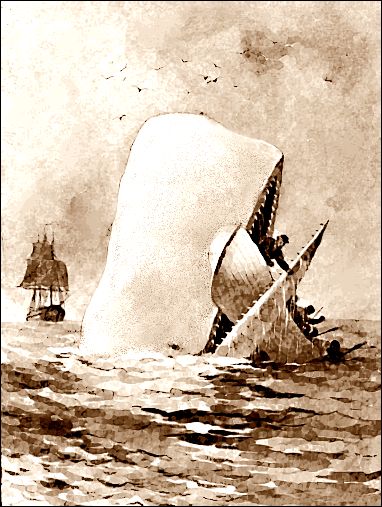
Mocha Dick เป็นวาฬสเปิร์มตัวผู้ที่มีอยู่จริงในประวัติศาสตร์ ขึ้นชื่อเรื่องรูปลักษณ์สีขาวราวผีและความก้าวร้าวรุนแรงต่อพวกนักล่าวาฬ เขาท่องไปในมหาสมุทรแปซิฟิกตะวันออกเฉียงใต้ในช่วงต้นคริสต์ทศวรรษ 1800 และกลายเป็นตำนานในหมู่นักล่าวาฬชาวอเมริกันและอังกฤษก่อนที่นักเขียนคนใดจะนำเรื่องราวของเขามาเขียนลงบนกระดาษ ชื่อเสียงของเขามาจากบทความในนิตยสารปี 1839 โดยนักสำรวจ J. N. Reynolds ซึ่งต่อมาเป็นแรงบันดาลใจหลักให้กับนวนิยายเรื่อง Moby-Dick ของ Herman Melville แม้ว่าเมลวิลล์จะเปลี่ยนวาฬตัวนี้ให้กลายเป็นสัญลักษณ์ที่เกือบจะเหนือธรรมชาติ แต่มอคค่า ดิคตัวจริงเป็นสัตว์ที่มีเลือดเนื้อซึ่งต่อสู้อย่างดุเดือดเพื่อชีวิตของเขา
ชีวิตช่วงต้นและภูมิหลัง
Mocha Dick เกิดในช่วงปลายคริสต์ศตวรรษที่ 1700 น่าจะในน่านน้ำกว้างใหญ่ของมหาสมุทรแปซิฟิก เมื่อยังเป็นวาฬสเปิร์มหนุ่ม เขาคงอาศัยอยู่ในฝูงสังคม เรียนรู้การล่าปลาหมึกและการเดินเรือตามกระแสน้ำมหาสมุทร เมื่อถึงต้นคริสต์ทศวรรษ 1800 เขาเติบโตเป็นวาฬตัวผู้ใหญ่ที่อยู่โดดเดี่ยว ผิวของเขาเปลี่ยนเป็นสีขาวสะดุดตาเนื่องจากภาวะผิวเผือกหรือลูซิซึม นักล่าวาฬที่ปฏิบัติการใกล้เกาะมอคค่า นอกชายฝั่งชิลี เริ่มพบเขาบ่อยขึ้น พวกเขาสังเกตเห็นสีที่ผิดปกติและการตอบสนองที่ดุร้ายต่อการโจมตี: เขาจะพุ่งชนเรือ ขบกราม และฟาดหาง มักรอดจากการถูกฉมวกหลายครั้ง เรื่องเล่าของวาฬที่น่าเกรงขามนี้แพร่กระจายจากท่าเรือสู่ท่าเรือ ทำให้เขากลายเป็นตำนานทางทะเลก่อนที่จะมีบันทึกเป็นลายลักษณ์อักษร
ความก้าวหน้าในอาชีพ
การก้าวกระโดดของ Mocha Dick เกิดขึ้นในปี 1839 เมื่อ J. N. Reynolds ตีพิมพ์ Mocha Dick, or The White Whale of the Pacific ในนิตยสาร The Knickerbocker บทความดังกล่าวบรรยายการต่อสู้ของวาฬกับนักล่าวาฬด้วยร้อยแก้วที่ชัดเจนและดราม่า ทำให้สถานะของเขาในวรรณกรรมอเมริกันมั่นคง เรย์โนลด์สรวบรวมเรื่องเล่าจากนักล่าวาฬที่พบเขารวมถึงลูกเรือที่สังหารเขาในที่สุดในปี 1838 บทความกลายเป็นที่ฮือฮา และทศวรรษต่อมา Herman Melville ก็ใช้มันเป็นหลักในการเขียน Moby-Dick เมลวิลล์เปลี่ยนชื่อจากมอคค่าเป็นโมบี้ และเพิ่มชั้นความหมายเชิงปรัชญา แต่แก่นของเรื่องคือวาฬขาวที่สู้กลับ มาจาก Mocha Dick โดยตรง นวนิยายเรื่องนี้ไม่เคยหมดพิมพ์และถูกศึกษาทั่วโลก
ไทม์ไลน์อาชีพ
ภาพลักษณ์สาธารณะและสไตล์
ภาพลักษณ์สาธารณะของ Mocha Dick คือสัตว์ทะเลขนาดยักษ์ในชีวิตจริง เป็นบุคคลที่น่าเศร้าและน่าทึ่งของธรรมชาติ สื่อและวรรณกรรมพรรณนาถึงเขาในฐานะวาฬขาวดั้งเดิม สัญลักษณ์ของธรรมชาติที่ยังไม่ถูกทำให้เชื่องและความไร้ประโยชน์ของการต่อสู้ของมนุษย์กับธรรมชาติ แฟนคลับของเขาส่วนใหญ่เป็นเชิงวิชาการและวรรณกรรม โดยไม่มีชื่อทางการ แฟนๆ มักเป็นผู้อ่าน Moby-Dick ผู้ชื่นชอบประวัติศาสตร์การเดินเรือ และผู้ติดตามวิทยาการสัตว์ประหลาด
ชื่อเสียงและแฟนด้อม (iFAMOUS Rankings)
Mocha Dick commands a quiet but enduring global attention, sustained not by modern media cycles but by his pivotal role in literary history and maritime folklore. His presence is felt wherever Herman Melville's Moby-Dick is studied, discussed, or celebrated, anchoring the imagination of readers across generations. Despite this deep cultural resonance, Mocha Dick does not currently hold a placement in the iFANN Global Top 1,000 rankings or any scope-based list. The iFANN evaluation confirms that while he remains a significant historical figure, he has no current numerical rank within the published hierarchy. The community surrounding him lacks an official name; there are no organized fan clubs, specific collective nouns like 'Dickites,' or formal campaigns dedicated solely to the whale himself. Instead, the audience consists of Melville scholars, maritime historians, and general readers who engage with his story through academic discourse and literary appreciation. While recent artistic projects, such as Tristin Lowe's 2026 exhibition at the Williams College Museum of Art, have brought visual attention to his legend, these are curated exhibitions rather than grassroots fan movements. Similarly, discussions regarding climate change or fatphobia in relation to the novel represent critical analysis rather than active fandom rituals. There are no birthday billboards, social media trends, or interactive traditions associated with the real Mocha Dick. His legacy survives through the pages of books and the halls of museums, where his tale of survival and aggression against whalers continues to be recounted as a foundational myth of American literature.
เรื่องน่าสนใจและตำนาน
Mocha Dick was not the only white whale in history; Migaloo, an albino humpback sighted off Australia since 1991, shares this rare genetic trait. According to explorer J. N. Reynolds, the real Mocha Dick was heavily covered in barnacles, a clear sign of his advanced age and decades of skirmishes. The name Mocha derives from Mocha Island, a small landmass off central Chile where he was frequently spotted. Unlike the fictional Moby Dick, who sinks only one ship, the real whale was credited with destroying multiple whaleboats over the years. Reynolds described him snapping his jaws so loudly the sound carried above the wind. A core legend tells of his resilience against approximately 100 different whaling ships before his death in 1838. He measured between 70 and 72 feet, making him one of the largest sperm whales ever recorded. In March 2026, scientists captured footage of modern sperm whales headbutting, behavior long debated and famously depicted in Moby-Dick, which validated the aggressive tactics attributed to Mocha Dick. While often conflated with the sinking of the Essex in 1820, that event involved a different whale, yet it contributed to the lore of the white whale's capacity for catastrophic attack.
คำพูดที่โดดเด่น
“But the monster was not to be vanquished without a struggle. He turned upon his assailants, lashing the sea with his tail, and snapping his huge jaws with a noise that was heard above the roar of the wind.”
ครอบครัวและชีวิตส่วนตัว
ในฐานะวาฬสเปิร์ม ชีวิตครอบครัวของ Mocha Dick ไม่ได้รับการบันทึก วาฬสเปิร์มตัวผู้มักจะออกจากฝูงเกิดหลังจากวัยรุ่นและใช้ชีวิตโดดเดี่ยว กลับไปยังแหล่งผสมพันธุ์เพื่อผสมพันธุ์เท่านั้น ไม่มีคู่หรือลูกหลานเฉพาะที่บันทึกไว้สำหรับ Mocha Dick ปฏิสัมพันธ์เดียวที่รู้จักกับวาฬอื่นน่าจะเกิดขึ้นในช่วงฤดูผสมพันธุ์ แต่ไม่มีรายละเอียดหลงเหลืออยู่
ความเชื่อมโยงที่โดดเด่น
J. N. Reynolds นักสำรวจและผู้เขียนบทความสำคัญในปี 1839 เกี่ยวกับ Mocha Dick Herman Melville ผู้แต่ง Moby-Dick ซึ่งใช้บันทึกของเรย์โนลด์สเป็นแรงบันดาลใจหลัก
ความสัมพันธ์และประวัติการคบหา
การเสียชีวิตและผลที่ตามมา
เสียชีวิต
1838 (อายุ 38 ปี)
สถานที่เสียชีวิต
near Mocha Island, Chile
สาเหตุการเสียชีวิต
Lethal harpooning by whalers
The end of the legendary white whale arrived in 1838, confirmed by whaling logs that recorded his final struggle against a determined crew. Mocha Dick fell after surviving over a hundred encounters with hunters who had long viewed him as an invincible foe, likely near the waters off Mocha Island, Chile, where he had made his home. Accounts suggest he may have been killed while attempting to defend a distressed cow and her calf, a final act of protection before succumbing to lethal harpoons in the open Pacific. Public reaction remained confined to the immediate whaling community.
His true legacy emerged through literature rather than ceremony. In May 1839, explorer Jeremiah N. Reynolds published a lengthy article titled "Mocha Dick; or, The White Whale of the Pacific" in the Knickerbocker Magazine, drawing on stories from crews like the one that finally killed him. This journalistic account served as the direct catalyst for Herman Melville, who would later adapt the real-life tragedy into the symbolic masterpiece Moby-Dick. That novel, published in 1851, transformed the historical animal into an immortal figure of fiction, ensuring his story survived long after his body returned to the ocean.
รางวัลและเกียรติยศ
View 4 records, honours and achievementsเป็นที่รู้จักจาก
Moby-Dick
1851 · Real-life inspiration
คำสำคัญ
ข้อมูลโดยย่อ
- Species
- Sperm whale (Physeter macrocephalus)
- Color
- White (albino or leucistic)
- เสียชีวิต
- 1838
- Famous for
- Inspiring Moby-Dick
คำถามที่พบบ่อย
Mocha Dick กับ Moby Dick ตัวเดียวกันหรือไม่?
Mocha Dick ตายอย่างไร?
Mocha Dick ตัวใหญ่แค่ไหน?
Mocha Dick ขาวจริงหรือ?
Mocha Dick อาศัยอยู่ที่ไหน?
บุคคลที่คล้ายกัน

เข้าร่วมชุมชน
แฟนกำลังพูดคุย