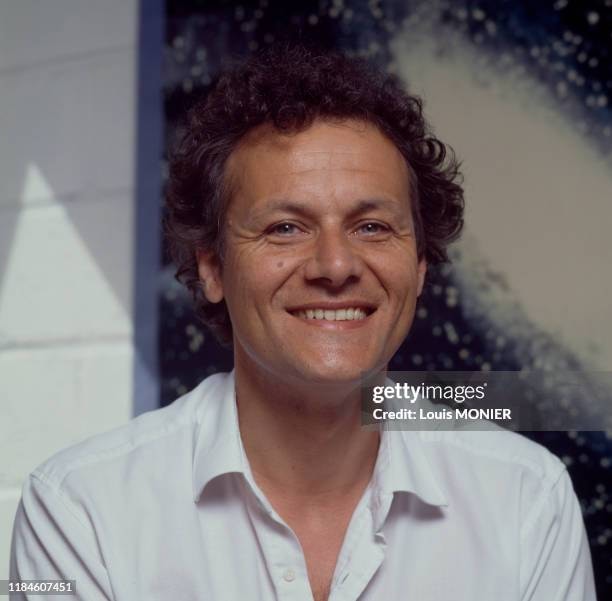
Jean-Pierre Luminet
 France
astrophysicist•writer•poet•artist
วันเกิด
June 3, 1951
ราศี
Gemini
สถานที่เกิด
Cavaillon, France
อายุ
อายุ 75 ปี
เกี่ยวกับ
Jean-Pierre Luminet เป็นนักฟิสิกส์ดาราศาสตร์ นักเขียน กวี และศิลปินทัศนศิลป์ชาวฝรั่งเศส เขามีชื่อเสียงจากการจำลองภาพหลุมดำในปี 1979 ซึ่งเป็นงานบุกเบิก, การทำงานด้านทอพอโลยีของเอกภพ และการสื่อสารวิทยาศาสตร์อย่างกว้างขวาง ปัจจุบัน (2026) เขาเป็นผู้อำนวยการวิจัยกิตติคุณที่ CNRS และนักวิทยาศาสตร์รับเชิญที่ Centre de Physique Théorique ในเมืองมาร์กเซย เขาเป็นผู้เขียนหนังสือ 28 เล่ม รวมถึงผลงานวิทยาศาสตร์ นวนิยายอิงประวัติศาสตร์ และบทกวี ซึ่งได้รับการแปลเป็นหลายภาษา Luminet ได้รับรางวัล UNESCO Kalinga Prize for Popularization of Science ในปี 2021 และรางวัล Georges Lemaître Prize ในปี 1999 ดาวเคราะห์น้อย 5523 Luminet ได้รับการตั้งชื่อตามเขา
ชีวิตช่วงต้นและภูมิหลัง
Jean-Pierre Luminet เติบโตที่เมือง Cavaillon เมืองเล็กๆ ใกล้เมือง Avignon ทางตะวันออกเฉียงใต้ของฝรั่งเศส ชีวิตช่วงต้นของเขาสมดุลระหว่างความถนัดทางคณิตศาสตร์ที่แข็งแกร่งกับความหลงใหลในการแสดงออกอย่างสร้างสรรค์ เขาศึกษาต่อขั้นสูงด้านฟิสิกส์และฟิสิกส์ดาราศาสตร์ที่ Université de Provence ตามด้วยการศึกษาระดับปริญญาเอกที่ Paris Observatory งานวิจัยระดับปริญญาเอกของเขามุ่งเน้นไปที่ฟิสิกส์หลุมดำและจักรวาลวิทยา ซึ่งนำไปสู่บทความสำคัญในปี 1979 ชื่อ "Image of a spherical black hole with thin accretion disk" ในวารสาร Astronomy & Astrophysics ผลงานนี้ซึ่งทำขึ้นด้วยการคำนวณด้วยมือและการสร้างแบบจำลองทางกายภาพ เป็นหนึ่งในการจำลองภาพหลุมดำที่สมจริงครั้งแรกๆ ก่อนที่ภาพจาก Event Horizon Telescope จะปรากฏถึงสี่ทศวรรษ ก่อนความสำเร็จครั้งสำคัญนี้ Luminet ยังได้พัฒนาความสนใจในบทกวีและศิลปะ ซึ่งต่อมาจะกำหนดเส้นทางอาชีพที่หลากหลายของเขา
ความก้าวหน้าในอาชีพ
หลังจากตีพิมพ์บทความในปี 1979 Luminet ได้กลายเป็นบุคคลสำคัญในวงการจักรวาลวิทยาของฝรั่งเศส ในช่วงทศวรรษ 1990 เขาเสนอว่าเอกภพอาจมีทอพอโลยีที่จำกัดและเชื่อมต่อกันหลายชั้น เช่น รูปทรงสิบสองหน้า (dodecahedron) หรือรูปทรงกลม (torus) ซึ่งท้าทายแบบจำลองระนาบอนันต์ที่เป็นที่ยอมรับทั่วไป เขาได้รับรางวัล Georges Lemaître Prize ในปี 1999 สำหรับผลงานด้านจักรวาลวิทยา การสื่อสารวิทยาศาสตร์ที่กว้างขวางของเขารวมถึงหนังสือวิทยาศาสตร์ 15 เล่ม นวนิยายอิงประวัติศาสตร์ 7 เล่ม และบทกวี 6 ชุด ซึ่งได้รับการแปลเป็นภาษาจีน เกาหลี และเยอรมัน ชื่อที่โดดเด่น ได้แก่ Le destin de l'univers (2003) และ Les trous noirs (2008) ในเดือนพฤศจิกายน 2021 เขาได้รับรางวัล UNESCO Kalinga Prize for Popularization of Science เขายังดำรงตำแหน่งในคณะบรรณาธิการของ Inference: The International Review of Science Luminet ยังคงทำการวิจัยในฐานะผู้อำนวยการกิตติคุณที่ CNRS และยังคงมีบทบาทในการเขียนและศิลปะ
ไทม์ไลน์อาชีพ
ภาพลักษณ์สาธารณะและสไตล์
Luminet มักถูกอธิบายว่าเป็น "กวีแห่งจักรวาล" เนื่องจากสไตล์การเขียนที่สง่างามและเป็นบทกวี ซึ่งทำให้ฟิสิกส์ดาราศาสตร์ที่ซับซ้อนเข้าถึงได้ สื่อฝรั่งเศสมักมองเขาว่าเป็นสมบัติของชาติในด้านการสื่อสารวิทยาศาสตร์ โดยมักจะสัมภาษณ์เขาทางวิทยุและโทรทัศน์ บุคลิกสาธารณะของเขาคือความเป็นอัจฉริยะรอบด้าน (Renaissance man) ซึ่งมีความคุ้นเคยทั้งในห้องทดลอง ห้องทำงานของนักเขียน และสตูดิโอของศิลปิน หนังสือและการบรรยายของเขามีลักษณะเด่นคือความชัดเจน ภาษาที่เป็นบทกวี และแนวทางเชิงปรัชญา โดยเชื่อมโยงจักรวาลวิทยาเข้ากับวรรณกรรมและศิลปะ เขาไม่มีการปรากฏตัวบนโซเชียลมีเดียที่สำคัญ โดยสื่อสารผ่านหนังสือ การประชุม และการสัมภาษณ์เป็นหลัก
ชื่อเสียงและแฟนด้อม
Jean-Pierre Luminet commands a distinguished presence within the global scientific community, where his name resonates with students, astronomers, and science enthusiasts worldwide. His influence stems from decades of bridging complex astrophysics with public imagination rather than mass-market celebrity status. According to the August 2026 evaluation by iFANN, Jean-Pierre Luminet is currently not ranked in the Global Top 1,000 or any specific scope list. The system has evaluated his profile but notes that he does not hold a placement in the published rankings at this time. Consequently, no ordinal position can be assigned to his current global fame metrics. While his work on black hole visualization and cosmic topology has achieved legendary status among physicists, the general public does not organize around him as a pop-culture icon. There is no documented fandom name for his supporters; his audience consists primarily of readers of his books, viewers of his documentaries, and members of the scientific community who follow his research. Unlike entertainers who cultivate dedicated fan clubs with specific monikers, Luminet's followers engage through his academic output and media appearances. The lack of a formal fanbase reflects his career trajectory as a civil servant and researcher rather than an entertainer seeking viral attention. His legacy is built on intellectual contribution rather than the rituals of fandom culture.
เรื่องน่าสนใจและตำนาน
Jean-Pierre Luminet's 1979 simulation of a black hole remains a marvel of pre-digital ingenuity, executed manually with physical calculations before computer graphics could render such images. He once collaborated with composer Gérard Grisey, a founder of spectral music, to fuse astrophysics with musical composition. As a leading proponent of the Poincaré dodecahedral space hypothesis, he continues to shape theories regarding the universe's shape. His six poetry collections uniquely blend scientific language with poetic form. The asteroid 5523 Luminet, discovered in 1991, bears his name in honor of his contributions. One of the few French scientists to receive the UNESCO Kalinga Prize, he joins past winners like Carl Sagan and David Attenborough. A widely retold story in his biography involves the 1978 creation of the first simulated image of a black hole. Because computing power was limited at the time, Luminet drew the resulting image by hand using pen and ink, creating a striking visual representation of light bending around the event horizon. This moment is frequently referenced as when humanity first artistically saw a black hole before the Event Horizon Telescope captured real images decades later. His authorship of the seminal book Black Holes further established his reputation as a communicator who made complex subjects accessible without a mathematical background.
คำพูดที่โดดเด่น
“Science and poetry are not opposites. They are two ways of approaching the same mystery: the universe and our place in it.”
“Forty years ago, I drew what I thought a black hole would look like. When I saw the Event Horizon Telescope image, I felt a profound emotion.”
“Perhaps the universe is not infinite. It may be finite but unbounded, like a sphere. This is not science fiction; it is a testable hypothesis.”
“Science communication is not a secondary activity. It is a duty for those who have been privileged to understand the universe a little better.”
ครอบครัวและชีวิตส่วนตัว
Jean-Pierre Luminet รักษาชีวิตครอบครัวไว้เป็นส่วนตัว แหล่งข้อมูลสาธารณะไม่ได้เปิดเผยชื่อคู่สมรสหรือบุตรของเขา รวมถึงรายละเอียดเกี่ยวกับพ่อแม่หรือพี่น้องของเขา เป็นที่ทราบกันว่าเขาเคยแต่งงาน แต่ไม่มีข้อมูลเพิ่มเติมใดๆ เขาให้ความสำคัญกับผลงานทางวิทยาศาสตร์และศิลปะของเขา
ความเชื่อมโยงที่โดดเด่น
Luminet ได้ร่วมงานกับนักประพันธ์เพลง Gérard Grisey ในโครงการผสมผสานดนตรีและวิทยาศาสตร์ เขาร่วมเขียนบทความและหนังสือเกี่ยวกับทอพอโลยีของเอกภพกับนักจักรวาลวิทยา Jean-Philippe Uzan ผู้ร่วมงานบ่อยครั้งอื่นๆ ได้แก่ นักฟิสิกส์ดาราศาสตร์ Marc Lachièze-Rey และ Roland Lehoucq และนักคณิตศาสตร์ Alain Connes
ความสัมพันธ์และประวัติการคบหา
ข้อมูลสาธารณะเกี่ยวกับความสัมพันธ์ของ Jean-Pierre Luminet มีจำกัดอย่างยิ่ง เขาเคยแต่งงาน แต่ชื่อของคู่สมรส ปีที่แต่งงาน และรายละเอียดใดๆ ไม่เปิดเผยต่อสาธารณะในแหล่งข้อมูลภาษาอังกฤษ เขาอาจมีบุตร แต่ยังไม่ได้รับการยืนยัน ณ ปี 2026 สถานะความสัมพันธ์ของเขาไม่เป็นที่ทราบ เนื่องจากเขาคงความเป็นส่วนตัวแยกจากบุคลิกสาธารณะของเขา
- แต่งงานแล้วไม่มีรายละเอียดสาธารณะเกี่ยวกับคู่สมรสหรือการแต่งงานของเขา
เงินเดือนและมูลค่าทรัพย์สินในปี 2026
$1.5 Million
การประเมินโดยทีมบรรณาธิการ iFANN
Jean-Pierre Luminet's net worth is not publicly documented through traditional corporate filings. Per iFANN's editorial analysis, his wealth is estimated at $1.5 Million as of 2026. Primary income sources include his CNRS salary, which typically ranges from €50,000 to €90,000 per year for senior directors, alongside book royalties from 28 published titles. Additional revenue streams come from proceeds of art sales featuring his engravings and sculptures, as well as speaking fees. The UNESCO Kalinga Prize included a monetary award of approximately $20,000 to $50,000. He has no known major endorsement deals, business ventures, or publicly documented real estate holdings.
รางวัลที่ได้รับ (5)
ลูมิเนต์ได้รับรางวัลอันทรงเกียรติหลายรางวัล เขาได้รับรางวัล Georges Lemaître Prize ในปี 1999 สำหรับสาขาจักรวาลวิทยา ในปี 2021 เขาได้รับรางวัล UNESCO Kalinga Prize for Popularization of Science เขายังได้รับรางวัลจาก French Academy of Sciences (Prix Jean Perrin, Prix Paul Doistau-Émile Blutet) และรางวัลวรรณกรรมจาก Académie Française
2021 · การสื่อสารวิทยาศาสตร์
Lifetime achievement
1999 · จักรวาลวิทยา
Contributions to cosmology
เป็นที่รู้จักจาก
Black hole visualization (1979 paper)
1979 · นักเขียน
Cosmic topology (finite universe hypothesis)
1990 · Proponent
Science communication (28 books, Kalinga Prize)
2021 · นักเขียน
คำสำคัญ
ข้อมูลโดยย่อ
- อาชีพ
- astrophysicist, writer, poet, artist
- เกิด
- June 3, 1951
- สถานที่เกิด
- Cavaillon, France
- เพศ
- ชาย
- ราศี
- Gemini
ข้อมูลส่วนตัว
- ชื่อเต็ม
- Jean-Pierre Luminet
- การศึกษา
- Université de Provence (Aix-Marseille University); Paris Observatory
คำถามที่พบบ่อย
Jean-Pierre Luminet เป็นที่รู้จักจากอะไร?
ฌอง-ปิแอร์ ลูมิเนต์ แต่งงานแล้วหรือยัง?
มูลค่าทรัพย์สินสุทธิของฌอง-ปิแอร์ ลูมิเนต์ คือเท่าไร?
ฌอง-ปิแอร์ ลูมิเนต์ อายุเท่าไร?
รางวัลคาลินกาที่ฌอง-ปิแอร์ ลูมิเนต์ ได้รับคืออะไร?
เข้าร่วมชุมชน
แฟนกำลังพูดคุย