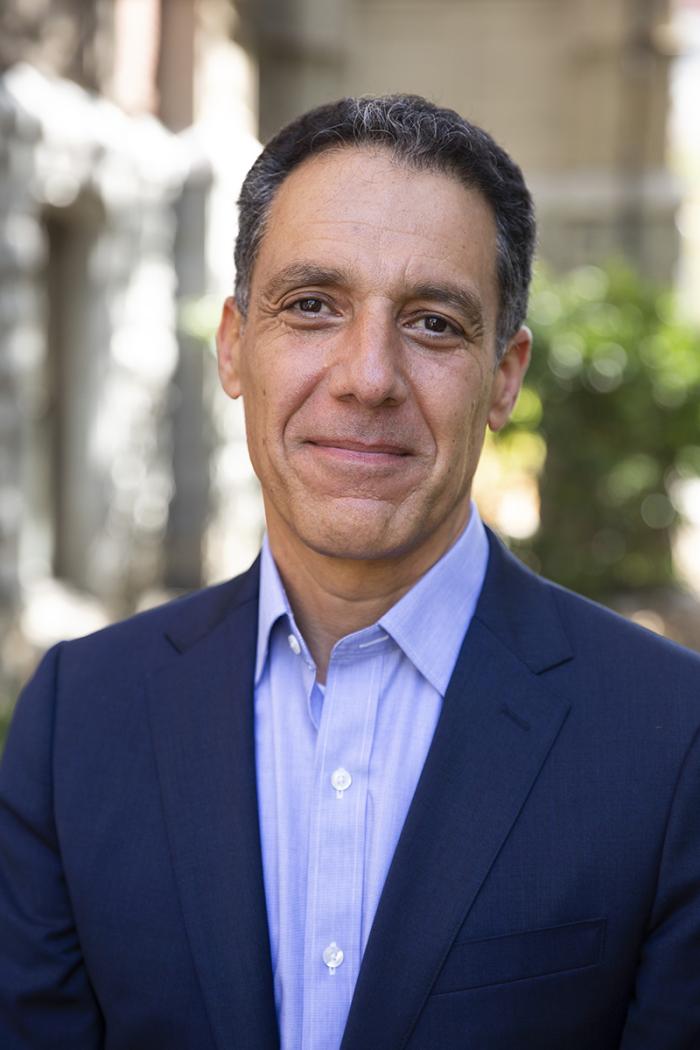
Hany Farid
 United States
นักวิทยาศาสตร์คอมพิวเตอร์
วันเกิด
February 10, 1966
ราศี
Aquarius
สถานที่เกิด
United States
อายุ
อายุ 60 ปี
ส่วนสูง
5 ft 10 in (178 cm)
เกี่ยวกับ
Hany Farid เป็นนักวิทยาศาสตร์คอมพิวเตอร์ชาวอเมริกันและศาสตราจารย์มหาวิทยาลัยที่กลายเป็นหนึ่งในผู้เชี่ยวชาญชั้นนำของโลกด้านนิติวิทยาศาสตร์ภาพดิจิทัลและการตรวจจับดีพเฟค เกิดเมื่อวันที่ 10 กุมภาพันธ์ ค.ศ. 1966 เขาเป็นที่รู้จักอย่างกว้างขวางในฐานะผู้ร่วมออกแบบอัลกอริทึม PhotoDNA เทคโนโลยีที่ใช้ทั่วโลกในการตรวจจับสื่อล่วงละเมิดทางเพศเด็กทางออนไลน์ Farid ดำรงตำแหน่งคณบดีและหัวหน้าคณะของ UC Berkeley School of Information และยังคงดำรงตำแหน่งคณาจารย์ที่นั่น เขาเป็นผู้เขียนหนังสือ Photo Forensics (2016) ซึ่งเป็นข้อมูลอ้างอิงมาตรฐานในสาขานี้ ผลงานของ Farid มีส่วนกำหนดวิธีการที่รัฐบาล หน่วยงานบังคับใช้กฎหมาย และบริษัทเทคโนโลยีใช้ในการตรวจสอบความถูกต้องของสื่อดิจิทัล เขาให้การต่อรัฐสภาเป็นประจำเกี่ยวกับความเสี่ยงของสื่อสังเคราะห์ และให้คำแนะนำด้านนโยบายที่เกี่ยวข้องกับเนื้อหาที่สร้างโดย AI ในปี 2026 เขาดำรงตำแหน่งประธานเจ้าหน้าที่ฝ่ายเทคโนโลยีคนแรกของ Coalition for Content Provenance and Authenticity (C2PA) ซึ่งเป็นองค์กรที่เขาช่วยก่อตั้งร่วมกับ Adobe, Microsoft และ BBC Farid ยังดำรงตำแหน่งที่ปรึกษาอาวุโสของ Content Authenticity Initiative (CAI) ในปี 2024 เขาได้รับการเสนอชื่อในรายชื่อ TIME 100 Next และรายชื่อ Politico 50 สำหรับอิทธิพลของเขาต่อเทคโนโลยีและนโยบาย ผลงานของเขายังคงถูกอ้างอิงในกฎหมายและคำตัดสินของศาลทั่วโลก
ชีวิตช่วงต้นและภูมิหลัง
Hany Farid เติบโตในสหรัฐอเมริกาด้วยความหลงใหลในคณิตศาสตร์และการคำนวณ เขาศึกษาระดับปริญญาตรีที่ University of Rochester ได้รับปริญญาวิทยาศาสตรบัณฑิตสาขาวิทยาการคอมพิวเตอร์และคณิตศาสตร์ จากนั้นเขาไปศึกษาต่อที่ University of Pennsylvania ซึ่งเขาได้รับปริญญาวิทยาศาสตรมหาบัณฑิตและปริญญาเอกสาขาวิทยาการคอมพิวเตอร์ โดยเน้นด้านคอมพิวเตอร์วิทัศน์และการวิเคราะห์ภาพ ในช่วงปลายทศวรรษ 1990 Farid เข้าร่วม Dartmouth College ในฐานะคณาจารย์ประจำภาควิชาวิทยาการคอมพิวเตอร์ ในช่วงเวลานี้ เขาเริ่มนำความเชี่ยวชาญด้านคอมพิวเตอร์วิทัศน์มาประยุกต์ใช้กับปัญหาการตรวจจับการดัดแปลงภาพ ซึ่งเป็นสาขาที่ยังอยู่ในช่วงเริ่มต้น ผลงานช่วงแรกของเขาในการตรวจจับการปลอมแปลงดิจิทัลผ่านการวิเคราะห์ทางสถิติของพิกเซลภาพ ทำให้เขาเป็นผู้บุกเบิกด้านนิติวิทยาศาสตร์ดิจิทัล เขาพัฒนาอัลกอริทึมพื้นฐานสำหรับการตรวจจับการดัดแปลงโดยอาศัยความไม่สอดคล้องของแสง สิ่งที่บ่งชี้จากการบีบอัด JPEG และรูปแบบสัญญาณรบกวนของเซนเซอร์กล้อง งานวิจัยช่วงแรกของเขาวางรากฐานสำหรับความก้าวหน้าในภายหลังของเขา
ความก้าวหน้าในอาชีพ
ความก้าวหน้าของ Farid เกิดขึ้นในปี 2009 เมื่อเขาร่วมออกแบบอัลกอริทึม PhotoDNA กับ Microsoft เทคโนโลยีนี้สร้างแฮชหรือลายนิ้วมือดิจิทัลเฉพาะของภาพ ทำให้แพลตฟอร์มสามารถตรวจจับและบล็อกสื่อล่วงละเมิดทางเพศเด็กที่รู้จักได้โดยไม่ต้องผ่านการตรวจสอบจากมนุษย์ ต่อมา PhotoDNA ถูกนำไปใช้โดย Facebook, Twitter, Google และ National Center for Missing and Exploited Children ในปี 2016 เขาตีพิมพ์หนังสือสำคัญของเขา Photo Forensics กับสำนักพิมพ์ MIT Press ในปี 2019 เขาเข้าร่วม UC Berkeley ในตำแหน่งศาสตราจารย์ประจำ School of Information และภาควิชาวิศวกรรมไฟฟ้าและวิทยาการคอมพิวเตอร์ ในปี 2021 เขาได้รับแต่งตั้งเป็นคณบดีและหัวหน้าคณะของ UC Berkeley School of Information ดำรงตำแหน่งจนถึงปี 2024 ในปี 2024 เขาได้รับแต่งตั้งเป็นประธานเจ้าหน้าที่ฝ่ายเทคโนโลยีคนแรกของ C2PA ในปี 2025 เขาก่อตั้ง Farid Forensics ซึ่งเป็นบริษัทที่ปรึกษาที่ให้บริการวิเคราะห์นิติวิทยาศาสตร์ดิจิทัลแก่องค์กรกฎหมาย องค์กรสื่อ และรัฐบาล Farid ให้การวิเคราะห์ผู้เชี่ยวชาญแก่ FBI, กระทรวงกลาโหมสหรัฐฯ และสำนักข่าวใหญ่ๆ เขาได้รับรางวัล ACM SIGMM Technical Achievement Award และรางวัล IEEE Signal Processing Society Best Paper Award
ไทม์ไลน์อาชีพ
ภาพลักษณ์สาธารณะและสไตล์
Hany Farid ได้รับการยอมรับอย่างกว้างขวางว่าเป็นผู้เชี่ยวชาญชั้นนำของโลกด้านนิติวิทยาศาสตร์ดิจิทัลและดีพเฟค การนำเสนอในสื่อมักจะอธิบายว่าเขาเป็นผู้มีอำนาจที่ได้รับคำปรึกษาเกี่ยวกับสื่อสังเคราะห์ รูปแบบการสื่อสารของเขามีความรอบคอบ แม่นยำ และเข้าถึงได้ หลีกเลี่ยงศัพท์เทคนิคทางวิชาการเมื่ออธิบายแนวคิดที่ซับซ้อน เขามักจะปรากฏตัวในชุดลำลองสำหรับธุรกิจหรือเสื้อสูทสำหรับการปรากฏตัวทางโทรทัศน์ แสดงถึงบุคลิกที่สงบและน่าเชื่อถือ Farid ไม่มีแฟนคลับแบบดั้งเดิม ผู้ชมของเขาส่วนใหญ่ประกอบด้วยผู้กำหนดนโยบาย นักข่าว ผู้เชี่ยวชาญด้านกฎหมาย และผู้นำในอุตสาหกรรมเทคโนโลยี เขามีความเคลื่อนไหวบน X (Twitter) โดยมีผู้ติดตามประมาณ 25,000 คน ซึ่งเขาแชร์ผลการวิจัยและความคิดเห็นเกี่ยวกับ AI และดีพเฟค เขาเคยขึ้นปกนิตยสาร WIRED และเขียนบทความให้กับ TIME และ The New York Times Magazine คำพูดที่โดดเด่นของเขารวมถึงคำเตือนเกี่ยวกับยุคที่การเห็นไม่ใช่การเชื่ออีกต่อไป และเรียกร้องให้มีมาตรฐานทางเทคนิคและการรู้เท่าทันสื่อ
ชื่อเสียงและแฟนด้อม (iFAMOUS Rankings)
Hany Farid commands a global audience defined by professional necessity rather than celebrity adoration, serving as the definitive authority on digital media authentication for governments, newsrooms, and legal systems worldwide. His influence is measured in the frequency with which editors and judges consult his expertise to verify the authenticity of evidence in an era of synthetic media. According to the iFANN Global Fame Engine evaluation conducted in August 2026, Hany Farid is currently evaluated but does not hold a placement in the published rankings for the Global Top 1,000 or any Top-100 scope list. This status reflects his position as a specialized academic and technical expert whose fame is concentrated within scientific, legal, and journalistic sectors rather than the general entertainment public. While his name appears frequently in high-profile reporting regarding deepfakes and misinformation, he has not accumulated a formalized fanbase or a specific fandom designation documented in the iFANN data. The absence of a named fandom aligns with his career trajectory as a computer scientist and university professor who engages with the public through lectures, media interviews, and consulting rather than through the mechanisms of pop culture stardom. Consequently, there are no organized fan campaigns, rituals, or dedicated communities operating under a specific banner to support his work, distinguishing him from figures whose public profiles rely on mass-market popularity.
เรื่องน่าสนใจและตำนาน
Hany Farid has testified as an expert witness in over 50 legal cases involving disputed digital evidence, utilizing his ability to analyze image metadata, lighting, shadows, and reflections to determine manipulation often within minutes. His seminal work on the PhotoDNA algorithm was inspired by a 2008 meeting with Microsoft executives tasked with the challenge of manually reviewing millions of images for child exploitation content. A prolific researcher, he has published over 150 peer-reviewed academic papers and book chapters, including the standard reference text Photo Forensics (2016). He was an early advocate for content credentials and digital watermarks to track the origin and editing history of media, though he notes that newer generative AI systems present increasing difficulties for forensic detection. In March 2026, he received the McGuire Prize, a significant milestone recognizing his contributions to digital forensics. A widely retold narrative emerged in June 2026 when Farid publicly admitted that despite decades of expertise, he can no longer trust his own eyes due to the advanced capabilities of generative AI to deceive human perception. This story, highlighted by major outlets like the New York Times, describes his state of being "flummoxed and scared" by the erosion of shared reality. Furthermore, he serves as a primary go-to authority for news editors asking whether content is AI-generated, a role that has become central to his current public profile in the fight against misinformation.
คำพูดที่โดดเด่น
“We are entering an era where seeing is no longer believing. The technology to create convincing fake audio and video is advancing faster than our ability to detect it.”
“The solution to deepfakes is not just better detection technology. We need technical standards for content provenance, legal frameworks for accountability, and media literacy education for the public.”
“PhotoDNA was designed to solve a specific problem: finding copies of known child sexual abuse material without anyone having to look at it. It's been remarkably effective, but it's only one piece of a much larger puzzle.”
“I am optimistic about technology's potential to solve problems, but I am not naive about the challenges. Every detection method we develop, someone will try to circumvent. It's an arms race.”
ครอบครัวและชีวิตส่วนตัว
Hany Farid แต่งงานแล้วและมีบุตร แม้ว่าเขาจะเก็บรายละเอียดเกี่ยวกับครอบครัวไว้เป็นส่วนตัว เขาไม่เปิดเผยชื่อคู่สมรส ชื่อและอายุของบุตรต่อสาธารณะ เขารักษาขอบเขตที่ชัดเจนระหว่างชีวิตการทำงานและชีวิตส่วนตัว และไม่มีข้อมูลเกี่ยวกับพ่อแม่หรือพี่น้องของเขาในแหล่งข้อมูลสาธารณะ เขาถือสัญชาติสหรัฐอเมริกาและแคนาดาคู่
ความเชื่อมโยงที่โดดเด่น
Hany Farid ร่วมมือกับ Microsoft Research ในโครงการ PhotoDNA, กับ Adobe ในโครงการ Content Authenticity Initiative, และกับสมาชิกผู้ก่อตั้ง C2PA ซึ่งรวมถึง Adobe, Microsoft, BBC, Intel, Sony, และ Truepic เขาทำงานอย่างใกล้ชิดกับเพื่อนร่วมงานที่ UC Berkeley และเคยที่ Dartmouth College เขามีความร่วมมือระยะยาวกับ National Center for Missing and Exploited Children (NCMEC) ในการใช้งาน PhotoDNA
ความสัมพันธ์และประวัติการคบหา
Hany Farid สมรสแล้ว แต่เขาไม่เปิดเผยข้อมูลเกี่ยวกับคู่สมรสหรือรายละเอียดความสัมพันธ์ต่อสาธารณะ ไม่มีบันทึกเกี่ยวกับการแต่งงานก่อนหน้านี้ การหย่าร้าง หรือความสัมพันธ์ที่มีชื่อเสียง เขามีบุตร แต่ชื่อและอายุของบุตรถูกเก็บเป็นความลับ ณ ปี 2026 Farid ยังคงสมรสอยู่ โดยไม่มีข้อมูลสาธารณะที่บ่งชี้ถึงการเปลี่ยนแปลงในสถานภาพสมรสของเขา
- แต่งงานแล้วปัจจุบันFarid สมรสแล้ว แต่ไม่มีการเปิดเผยชื่อคู่สมรสและรายละเอียดความสัมพันธ์ต่อสาธารณะ
เงินเดือนและมูลค่าทรัพย์สินในปี 2026
$4 Million
การประเมินโดยทีมบรรณาธิการ iFANN
Per iFANN's editorial analysis, Hany Farid's estimated net worth is $4 Million. His primary income sources include his academic salary as a tenured professor at UC Berkeley, estimated at $200,000-350,000 annually. He charges $500-1,000+ per hour for forensic analysis consulting, with annual consulting revenue estimated at $200,000-500,000. Speaking engagements at technology conferences and universities command fees of $10,000-25,000 per appearance. His book Photo Forensics generates modest royalty income. In 2025, he launched Farid Forensics, a consulting firm that handles cases involving AI-generated evidence in legal proceedings, adding to his revenue. Patent royalties from PhotoDNA, which is owned by Microsoft, are not publicly documented.
รางวัลที่ได้รับ (3)
Hany Farid ได้รับรางวัลทางวิชาการและวิชาชีพหลายรางวัลสำหรับผลงานด้านนิติวิทยาศาสตร์ดิจิทัล เขาได้รับรางวัล ACM SIGMM Technical Achievement Award สำหรับนิติวิทยาศาสตร์มัลติมีเดียและความปลอดภัย และรางวัล IEEE Signal Processing Society Best Paper Award สำหรับงานวิจัยด้านนิติวิทยาศาสตร์ภาพดิจิทัล เขายังได้รับรางวัล National Science Foundation CAREER Award และรางวัล Dartmouth College Faculty Research Awards หลายรางวัล เขาไม่ได้รับรางวัลในอุตสาหกรรมบันเทิง เช่น Oscars หรือ Grammys
ความสำเร็จทางเทคนิค
multimedia forensics and security
Best Paper
digital image forensics
เป็นที่รู้จักจาก
PhotoDNA
2009 · Co-designer
Photo Forensics
2016 · นักเขียน
Deepfake Detection
2020 · Leading expert
C2PA
2024 · Chief Technology Officer
คำสำคัญ
ข้อมูลโดยย่อ
- อาชีพ
- นักวิทยาศาสตร์คอมพิวเตอร์
- สถานที่เกิด
- สหรัฐอเมริกา
- เพศ
- ชาย
ข้อมูลส่วนตัว
- ส่วนสูง
- 5 ft 10 in (178 cm)
- การศึกษา
- B.S. in Computer Science and Mathematics from University of Rochester; M.S. and Ph.D. in Computer Science from University of Pennsylvania
คำถามที่พบบ่อย
Hany Farid สมรสแล้วหรือไม่?
มูลค่าทรัพย์สินของ Hany Farid ในปี 2026 คือเท่าไร?
Hany Farid อายุเท่าไร?
Hany Farid คิดค้นอะไร?
Hany Farid มีลูกไหม?
โซเชียลมีเดีย
เข้าร่วมชุมชน
แฟนกำลังพูดคุย