
Democritus
Also known as: The Laughing Philosopher, Gelasinos
วันเกิด
460 BCE
ราศี
Capricorn
สถานที่เกิด
Abdera, Thrace (modern-day Avdira, Greece)
อายุ
Died at 90
เกี่ยวกับ
Democritus of Abdera, born around 460 BCE, was a pre-Socratic philosopher who formulated one of history's most influential ideas: that everything in the universe is made of tiny, indivisible particles called atoms moving through empty space. He wrote on ethics, physics, mathematics, music, and more, earning the nickname the Laughing Philosopher for his belief that cheerfulness is life's highest goal. None of his original works survive; we know him through fragments preserved by later authors and through Aristotle's critical engagement with his ideas. Democritus died around 370 BCE, but his atomic theory lived on, influencing Epicurus and, eventually, modern science.
ชีวิตช่วงต้นและภูมิหลัง
Democritus grew up in a wealthy household in Abdera, a Greek colony on the northern Aegean coast. His father, Hegesistratus, reportedly entertained the Persian king Xerxes during his invasion of Greece around 480 BCE. As a reward, Xerxes left Magi and Chaldean scholars with the family, who taught young Democritus astronomy and theology. After his father died, Democritus used his substantial inheritance to fund extensive travels across the known world. He journeyed to Egypt, Persia, Babylon, India, and possibly Ethiopia, seeking knowledge from priests and scholars. In Abdera, he studied under Leucippus, the founder of atomism, whose teachings became the foundation of Democritus's own philosophy.
ความก้าวหน้าในอาชีพ
Democritus's career unfolded over decades of writing and teaching. Around 420 to 400 BCE, he composed the bulk of his works, including the Great World-System and Little World-System, as well as treatises on ethics and natural philosophy. He visited Athens around 400 BCE, where he reportedly said, I came to Athens and no one knew me, reflecting his obscurity in the intellectual capital despite fame elsewhere. Back in Abdera, he continued writing and teaching, earning the nickname the Laughing Philosopher for his cheerful disposition. His atomic theory was later adopted and modified by Epicurus and popularized by the Roman poet Lucretius. In the modern era, John Dalton acknowledged Democritus as a precursor to atomic theory.
ไทม์ไลน์อาชีพ
ภาพลักษณ์สาธารณะและสไตล์
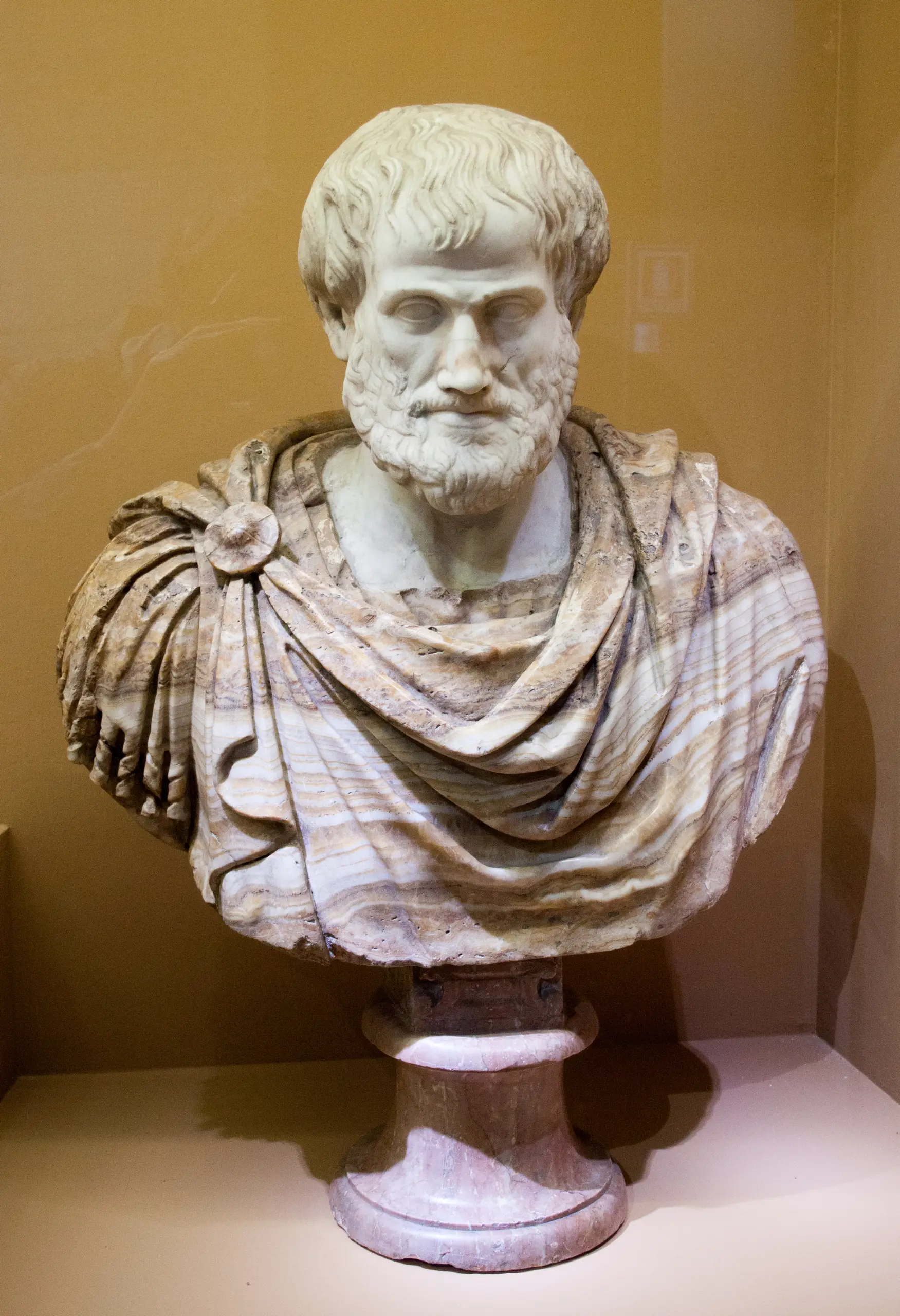
In ancient art, Democritus is typically depicted as an older, bearded philosopher, often shown laughing or smiling, sometimes holding a globe or astronomical instrument. The Laughing Philosopher iconography contrasts with Heraclitus, the Weeping Philosopher. Renaissance painters like Jusepe de Ribera depicted him laughing while Heraclitus weeps. He appears in Voltaire's writings and Montaigne's Essays. Today, interest in Democritus is largely academic, with his Wikipedia page receiving tens of thousands of monthly views.
ชื่อเสียงและแฟนด้อม
Democritus, the ancient Greek philosopher who first conceived of atoms, has been evaluated by iFANN's Global Fame Engine but currently holds no placement in the published rankings. He does not appear among the Global Top 1,000 or any Top-100 scope list. This is a neutral statement of fact, not a judgment on his historical significance, his fame endures in classrooms, science popularizations, and even tech circles, but it does not translate into the kind of measurable contemporary ranking iFANN tracks.
His fanbase has no formal name. There are no organized fan clubs, no conventions, no coordinated campaigns, nothing resembling modern celebrity fandom. Instead, his legacy is carried by philosophy students, academics, and enthusiasts who celebrate his atomic theory as one of antiquity's most prescient ideas. Popular science writers often hail him as "The Atomic Visionary," and his quotes occasionally surface in news features. In a curious modern echo, the TRON blockchain network named a 2025 upgrade "Democritus," and Scott Aaronson's book Quantum Computing Since Democritus uses his name as a touchstone. These are cultural references, not fan-driven initiatives, but they keep his name alive in unexpected corners.
เรื่องน่าสนใจและตำนาน
Democritus was known as the Laughing Philosopher because he believed cheerfulness was the highest good. One apocryphal story claims he blinded himself by staring at the sun to prevent his eyes from distracting his mind. He wrote on nearly every subject, including physics, mathematics, astronomy, ethics, music, poetry, painting, medicine, agriculture, military tactics, and the properties of magnets. He estimated the size of the sun as as large as it appears, a much smaller estimate than Anaxagoras's claim. His atomic theory included the concept of images (eidola), thin atomic films emitted by objects that cause vision. Plato reportedly disliked Democritus so much that he wanted all his books burned. Democritus outlived Socrates by about 30 years despite being born earlier. He believed the Milky Way was composed of countless distant stars, an astonishingly prescient view for the 5th century BCE.
A legend persists that the citizens of Abdera thought Democritus insane because he laughed at everyday seriousness, and they called in Hippocrates to examine him, the physician reportedly declared him the wisest man in Abdera. Another ancient tale claims he was so wise that he was consulted as an oracle-like figure. Both are folklore from later traditions, but they remain part of his enduring mystique.
คำพูดที่โดดเด่น
“Nothing exists except atoms and the void; everything else is opinion.”
“Happiness does not reside in possessions or in gold; happiness dwells in the soul.”
“The cheerful man, who is impelled toward just and lawful deeds, rejoices day and night, and is strong and free from care.”
“It is better to examine your own faults than those of others.”
“I would rather discover a single cause than gain the kingdom of Persia.”
“In Abdera, I came to Athens and no one knew me.”
ครอบครัวและชีวิตส่วนตัว
Democritus was the son of Hegesistratus (or Damasippus according to some accounts), a wealthy Abderite. He had at least two brothers named Herodotus and Damasus. No record exists of him ever marrying or having children; ancient sources unanimously describe him as a lifelong bachelor who devoted himself entirely to philosophy.
ความเชื่อมโยงที่โดดเด่น
Democritus was a student of Leucippus, the founder of atomism. His ideas influenced Epicurus and were later popularized by the Roman poet Lucretius. Aristotle engaged critically with his work, preserving many of his arguments. Diogenes Laërtius wrote the only ancient biography. He was a contemporary of Socrates and Hippocrates, and a fellow Abderite of Protagoras.
ความสัมพันธ์และประวัติการคบหา
ไม่มีบันทึกทางประวัติศาสตร์ที่น่าเชื่อถือเกี่ยวกับความสัมพันธ์โรแมนติก การแต่งงาน หรือบุตร แหล่งข้อมูลโบราณบรรยายเป็นเอกฉันท์ว่าเดโมคริตุสเป็นโสดตลอดชีวิตผู้ทุ่มเทให้กับปรัชญาอย่างเต็มที่ ไดโอจีนส ลาเออร์ติอุสรายงานว่าเขาได้สละทรัพย์สินทั้งหมดและใช้ชีวิตอย่างเรียบง่าย โดยไม่มีการกล่าวถึงภรรยาหรือครอบครัว เรื่องเล่าในยุคหลังบางเรื่องชี้ให้เห็นว่าเขาจงใจหลีกเลี่ยงการแต่งงานเพื่อรักษาเสรีภาพทางปัญญาของเขา
มูลค่าทรัพย์สิน (มูลค่ามรดก)
$0
การประเมินโดยทีมบรรณาธิการ iFANN
iFANN currently estimates Democritus's net worth at $0. He has been deceased for approximately 2,390 years, leaving no estate that generates revenue. His written works are entirely lost except for about 300 fragments preserved as quotations by later authors. No copyright, licensing, or royalty income exists. The only financial value associated with his name is through academic institutions like the Democritus University of Thrace, which does not generate revenue for any estate. As of 2026, no net worth can be attributed to him.
รางวัลและเกียรติยศ
View 13 records, honours and achievementsเป็นที่รู้จักจาก
Atomic Theory
c. 420 BCE · Developer
The Laughing Philosopher
c. 390 BCE · Epithet
คำสำคัญ
ข้อมูลโดยย่อ
- อาชีพ
- Philosopher
- เกิด
- c. 460 BCE
- สถานที่เกิด
- Abdera, Thrace
- เสียชีวิต
- c. 370 BCE
- สถานที่เสียชีวิต
- Abdera, Thrace
- เพศ
- ชาย
- ราศี
- Capricorn
ข้อมูลส่วนตัว
- ชื่อเต็ม
- Democritus (Δημόκριτος)
- การศึกษา
- Studied under Leucippus; studied geometry with Egyptian priests; learned astronomy from Babylonian Chaldeans
คำถามที่พบบ่อย
เดโมคริตุสเป็นที่รู้จักจากอะไร?
เดโมคริตุสเชื่อในพระเจ้าหรือไม่?
เดโมคริตุสเสียชีวิตอย่างไร?
อะไรคือความแตกต่างระหว่างเดโมคริตุสและลิวซิปปัส?
เพลโตคิดอย่างไรเกี่ยวกับเดโมคริตุส?
บุคคลที่คล้ายกัน
เข้าร่วมชุมชน
แฟนกำลังพูดคุย