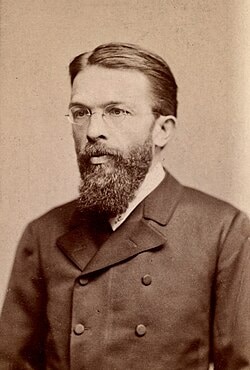
Carl Menger
 Austria
Also known as: Carl Menger Edler von Wolfensgrün
วันเกิด
February 28, 1840
ราศี
Pisces
สถานที่เกิด
Neu-Sandec, Kingdom of Galicia and Lodomeria, Austrian Empire (now Nowy Sącz, Poland)
อายุ
เสียชีวิตเมื่ออายุ 80 ปี
เกี่ยวกับ
Carl Menger was an Austrian economist who founded the Austrian school of economics. His 1871 book Principles of Economics introduced the subjective theory of value and marginal utility, reshaping how economists understand value. Menger argued that value is determined by individuals' preferences, not by labor costs or inherent properties of goods. This directly challenged classical economists like Adam Smith, David Ricardo, and Karl Marx.
Today, Menger's ideas continue to influence economic thought, particularly in entrepreneurship and market process theory. His disciples Eugen von Böhm-Bawerk and Friedrich von Wieser expanded his work, and Friedrich Hayek later stated that the Austrian school's fundamental ideas belong fully to Menger. Though he published relatively few works, their impact has been profound.
ชีวิตช่วงต้นและภูมิหลัง
Carl Menger เกิดในครอบครัวที่ร่ำรวยของขุนนางชั้นผู้น้อยใน Neu-Sandec, Galicia ซึ่งเป็นส่วนหนึ่งของจักรวรรดิออสเตรีย บิดาของเขาคือ Anton เป็นทนายความ และมารดาคือ Caroline เป็นบุตรสาวของพ่อค้าชาวโบฮีเมียที่ร่ำรวย เขามีพี่ชายสองคน: Anton ซึ่งต่อมาเป็นศาสตราจารย์ด้านกฎหมายและนักเขียนสังคมนิยม และ Max ซึ่งเป็นทนายความและสมาชิกรัฐสภาออสเตรียฝ่ายเสรีนิยม ครอบครัว Menger ประกอบด้วยช่างฝีมือ นักดนตรี ข้าราชการ และนายทหาร ซึ่งทั้งหมดอพยพมาจากโบฮีเมียหนึ่งรุ่นก่อนที่เขาจะเกิด
Menger ศึกษากฎหมายและรัฐศาสตร์ที่มหาวิทยาลัยปรากและเวียนนา ครูคนหนึ่งของเขาที่เวียนนาคือ Peter Mischler ผู้สนับสนุนทฤษฎีมูลค่าส่วนเพิ่ม แต่ Menger ไม่ได้สนใจเศรษฐศาสตร์หรืออาชีพทางวิชาการในตอนนั้น เขาได้รับปริญญาเอกด้านกฎหมายจากมหาวิทยาลัย Jagiellonian ในคราคูฟในปี 1867
หลังจากเรียนจบ Menger เริ่มทำงานเป็นนักข่าวในปี 1863 ให้กับ Lemberger Zeitung เขาก่อตั้งวารสาร Wiener Tagblatt ซึ่งตีพิมพ์ครั้งแรกเมื่อวันที่ 26 พฤศจิกายน 1865 ในฉบับแรกๆ เขาตีพิมพ์นวนิยายนิรนามที่มีชื่ออื้อฉาว Der ewige Jude in Wien (The Eternal Jew in Vienna) ในเดือนมีนาคม 1866 เขาเข้าร่วมทีมเศรษฐศาสตร์ของ Wiener Zeitung ซึ่งเป็นหนังสือพิมพ์ที่รัฐบาลควบคุม ทำให้กลายเป็นพนักงานรัฐบาลในตำแหน่งที่ก้าวหน้าเร็ว
ขณะทำงานเป็นนักข่าวธุรกิจ Menger สังเกตเห็นความไม่สอดคล้องระหว่างทฤษฎีเศรษฐศาสตร์ที่มีอยู่ โดยเฉพาะเศรษฐศาสตร์คลาสสิก กับวิธีที่ผู้ซื้อใช้เหตุผลในตลาดจริง การสังเกตนี้ผลักดันให้เขาพัฒนากรอบทฤษฎีของตนเอง
ความก้าวหน้าในอาชีพ
ในปี 1871 Menger ตีพิมพ์ผลงานชิ้นสำคัญของเขา Principles of Economics (Grundsätze der Volkswirtschaftslehre) หนังสือเล่มนี้แนะนำแนวคิดเรื่องอรรถประโยชน์ส่วนเพิ่มและทฤษฎีมูลค่าตามอัตวิสัย โดยโต้แย้งว่ามูลค่าของสินค้าเกิดจากความสัมพันธ์กับความต้องการของมนุษย์ ผลงานนี้ก่อตั้งสำนักเศรษฐศาสตร์ออสเตรีย และเป็นหนึ่งในสามการกำหนดสูตรอิสระของการปฏิวัติอรรถประโยชน์ส่วนเพิ่ม ร่วมกับ William Jevons และ Léon Walras
หนึ่งปีหลังจากการตีพิมพ์ Menger มีคุณสมบัติเป็นศาสตราจารย์ที่มหาวิทยาลัยเวียนนา เขาได้รับแต่งตั้งเป็นรองศาสตราจารย์ในปี 1873 และเป็นศาสตราจารย์เต็มตัวในปี 1879 ซึ่งเป็นตำแหน่งที่เขาดำรงอยู่จนกระทั่งเกษียณอายุก่อนกำหนด เขาปฏิเสธการเสนอตำแหน่งจากมหาวิทยาลัยต่างประเทศ
ตั้งแต่ปี 1876 ถึง 1878 Menger ทำหน้าที่เป็นครูสอนพิเศษส่วนตัวและที่ปรึกษาให้กับ Crown Prince Rudolf แห่งออสเตรีย โดยเดินทางศึกษาอย่างกว้างขวางผ่านเยอรมนี ฝรั่งเศส สวิตเซอร์แลนด์ และอังกฤษ ในปี 1883 เขาตีพิมพ์ Investigations into the Method of the Social Sciences เพื่อปกป้องการวิจัยเชิงทฤษฎีจากสำนักประวัติศาสตร์เยอรมัน และจุดชนวน Methodenstreit (ข้อพิพาทเชิงวิธีการ)
ในปี 1900 Menger ได้รับแต่งตั้งเป็นสมาชิกตลอดชีพของสภาขุนนางออสเตรีย เขาเกษียณจากตำแหน่งศาสตราจารย์ในปี 1903 และอุทิศตนให้กับการศึกษาจนกระทั่งเสียชีวิตในปี 1921
ไทม์ไลน์อาชีพ
ภาพลักษณ์สาธารณะและสไตล์
Menger ถูกนำเสนออย่างสม่ำเสมอในแวดวงวิชาการในฐานะผู้ก่อตั้งสำนักเศรษฐศาสตร์ออสเตรียและนักคิดปฏิวัติที่ท้าทายเศรษฐศาสตร์คลาสสิก เขาถูกพรรณนาว่าเป็นผู้สังเกตการณ์พฤติกรรมตลาดในโลกแห่งความเป็นจริงอย่างรอบคอบ ผู้สร้างทฤษฎีจากการสังเกตเชิงประจักษ์ ภาพเหมือนแสดงให้เห็นเขาเป็นนักวิชาการในศตวรรษที่ 19 ที่ดูเคร่งขรึม มีหนวดเครา และสวมชุดทางการ ผู้ติดตามของเขาส่วนใหญ่เป็นนักศึกษาเศรษฐศาสตร์ออสเตรีย เสรีนิยม และผู้สนับสนุนตลาดเสรี องค์กรต่างๆ เช่น Mises Institute, Cato Institute และ Students For Liberty ส่งเสริมผลงานของเขาอย่างแข็งขัน
ชื่อเสียงและแฟนด้อม
Carl Menger, the founder of the Austrian School of Economics, is not currently ranked in iFANN's Global Fame Engine. Despite his monumental influence on economic thought, the engine has evaluated him as unranked, meaning he holds no placement in the published Global Top 1,000 or any Top-100 scope list. This absence reflects the quiet, academic nature of his legacy rather than any lack of significance.
His admirers form an intellectual community rather than a conventional fanbase, and no formal fandom name exists. The Austrian School tradition itself, with institutions like the Mises Institute and the Foundation for Economic Education, serves as the closest analogue, preserving and promoting his work with near-reverential dedication. Rituals such as the Carl Menger Essay Contest and scholarly conferences mark his legacy, but these are academic observances, not fan gatherings.
Menger's fame, then, is of a peculiar kind, profound within economics, yet largely invisible to the broader public. The legendary tales surrounding him are intellectual: the 1871 publication of Principles of Economics, the bitter Methodenstreit with the German Historical School, and his insights into spontaneous order. These stories are retold in classrooms and seminars, not in stadiums. His standing is that of a founding figure whose ideas continue to shape discourse, even as the global fame metrics pass him by.
เรื่องน่าสนใจและตำนาน
Carl Menger Edler von Wolfesgrün, though he and his brothers never used their title of nobility, was a true polymath in his youth, intellectually vigorous into old age. He founded the journal Wiener Tagblatt and published an anonymous novel titled Der ewige Jude in Wien in its early issues. Initially uninterested in economics or an academic career, he preferred non-academic writing.
Menger's 1871 Principles of Economics is the foundational legend of the Austrian School, born from his observations of real market behavior that contradicted classical theory. The Methodenstreit, his bitter methodological dispute with Gustav von Schmoller, became a heroic tale of theory versus bureaucratic establishment, cementing the school's outsider identity. His 1883 Investigations into the Method of the Social Sciences introduced the concept of spontaneous order, explaining how institutions like money emerge without design. A peculiar legend involves obituaries for other men named Carl Menger, occasionally surfacing and causing confusion about the economist's 1921 death.
คำพูดที่โดดเด่น
“The value of goods arises from their relation to our needs, and is not something inherent in the goods themselves.”
“In real life there are only concrete goods and concrete wants.”
“The degree of mankind's economic progress will be proportional to the advancement of human knowledge.”
ครอบครัวและชีวิตส่วนตัว
Carl Menger แต่งงานแล้วและมีบุตรชายหนึ่งคนคือ Karl Menger (1902-1985) ซึ่งต่อมาเป็นนักคณิตศาสตร์ที่มีชื่อเสียงและสอนเป็นเวลาหลายปีที่ Illinois Institute of Technology รายละเอียดเกี่ยวกับภรรยาของ Menger ไม่ได้ถูกบันทึกไว้อย่างแพร่หลายในแหล่งชีวประวัติมาตรฐาน Menger มาจากครอบครัวขุนนางชั้นผู้น้อย บิดาของเขาคือ Anton เป็นทนายความ และมารดาคือ Caroline เป็นบุตรสาวของพ่อค้าที่ร่ำรวย เขามีพี่ชายสองคน: Anton ศาสตราจารย์ด้านกฎหมายและนักเขียนสังคมนิยม และ Max ทนายความซึ่งดำรงตำแหน่งสมาชิกรัฐสภาออสเตรียฝ่ายเสรีนิยม
ความเชื่อมโยงที่โดดเด่น
แนวคิดของเมนเกอร์ได้รับการขยายความโดยลูกศิษย์ Eugen von Böhm-Bawerk และ Friedrich von Wieser ต่อมานักเศรษฐศาสตร์สำนักออสเตรีย Friedrich Hayek และ Ludwig von Mises ได้สานต่องานของเขา เขาเคยเป็นอาจารย์สอนมกุฎราชกุมารรูดอล์ฟแห่งออสเตรีย Karl Menger บุตรชายของเขาได้เป็นนักคณิตศาสตร์ Anton และ Max พี่น้องของเขาเป็นศาสตราจารย์ด้านกฎหมายและสมาชิกสภาผู้แทนราษฎรฝ่ายเสรีนิยมตามลำดับ
ความสัมพันธ์และประวัติการคบหา
Carl Menger แต่งงานแล้ว แม้ว่ารายละเอียดเกี่ยวกับภรรยาของเขาจะไม่ถูกบันทึกอย่างแพร่หลายในแหล่งชีวประวัติมาตรฐาน ทั้งคู่มีบุตรชายหนึ่งคนชื่อ Karl Menger เกิดในปี 1902 ซึ่งต่อมาเป็นนักคณิตศาสตร์ Menger เสียชีวิตเมื่อวันที่ 26 กุมภาพันธ์ 1921 ในเวียนนา ไม่มีการบันทึกความสัมพันธ์โรแมนติกอื่นใดในแหล่งชีวประวัติที่เชื่อถือได้
- แต่งงานแล้วรายละเอียดเกี่ยวกับภรรยาของ Menger ไม่ได้ถูกบันทึกอย่างแพร่หลายในแหล่งชีวประวัติมาตรฐาน
การเสียชีวิตและผลที่ตามมา
เสียชีวิต
February 26, 1921 (อายุ 80 ปี)
สถานที่เสียชีวิต
Vienna, Austria
สาเหตุการเสียชีวิต
Natural causes associated with advanced age
Carl Menger spent his final days in Vienna, continuing his academic work and writing until shortly before his passing. He died on February 26, 1921, at the age of eighty following a long illness that was consistent with natural causes associated with advanced age. The circumstances were treated as a peaceful departure by those who witnessed them. The economic community responded with profound respect, recognizing him immediately as the founder of the Austrian School and a principal architect of the Marginalist Revolution. Tributes focused on his theoretical contributions, particularly the subjective theory of value and marginal utility, which he co-discovered alongside William Stanley Jevons and Léon Walras. While specific details regarding the date and location of his funeral service remain unrecorded in standard biographical sources, it is historically established that he was buried in Vienna.
Notable figures within his intellectual circle, including Ludwig von Mises and Friedrich Hayek, mourned his loss as the end of an era for classical liberal economic thought. His posthumous influence has been immense, with institutions such as the Samford University Brock School of Business establishing the Carl Menger Essay Contest to honor his legacy. The Mises Institute continues to publish extensively on his life and works, solidifying his status as the sole founder of the Austrian School. Modern commentary frequently cites his theories in relation to libertarian movements.
รางวัลที่ได้รับ (1)
Menger ได้รับแต่งตั้งเป็นสมาชิกตลอดชีพของสภาขุนนางออสเตรียในปี 1900 ซึ่งเป็นเกียรติยศสำคัญที่ทำให้เขาอยู่ในสภาสูงของรัฐสภาจักรวรรดิตลอดชีวิต เขายังได้รับเกียรติและรางวัลอื่นๆ อีกมากมาย แม้ว่าจะไม่มีการระบุตำแหน่งเฉพาะในแหล่งข้อมูลที่มีอยู่
1900 · การแต่งตั้งกิตติมศักดิ์
เป็นที่รู้จักจาก
Principles of Economics
1871 · Author
Investigations into the Method of the Social Sciences
1883 · Author
คำสำคัญ
แหล่งที่มา
ข้อมูลโดยย่อ
- อาชีพ
- economist, professor
- เกิด
- +1840-02-28
- สถานที่เกิด
- Neu-Sandec, Galicia, Austrian Empire
- เสียชีวิต
- +1921-02-26
- สถานที่เสียชีวิต
- Vienna, Austria
- เพศ
- ชาย
- ราศี
- Pisces
- Education
- Doctorate in law, Jagiellonian University (1867)
ข้อมูลส่วนตัว
- ชื่อเต็ม
- Carl Menger Edler von Wolfensgrün
- บุตร
- Karl Menger
- การศึกษา
- Doctorate in law from Jagiellonian University in Kraków (1867)
คำถามที่พบบ่อย
Carl Menger เป็นที่รู้จักในเรื่องใด?
Carl Menger แต่งงานหรือไม่? เขามีบุตรหรือไม่?
Carl Menger เสียชีวิตอย่างไร?
หนังสือที่มีชื่อเสียงที่สุดของ Carl Menger คืออะไร?
Carl Menger เสียชีวิตเมื่ออายุเท่าใด?
บุคคลที่คล้ายกัน
เข้าร่วมชุมชน
แฟนกำลังพูดคุย