Bhagavad Gita
"The Song of God"
Vyāsa
ภาพรวม
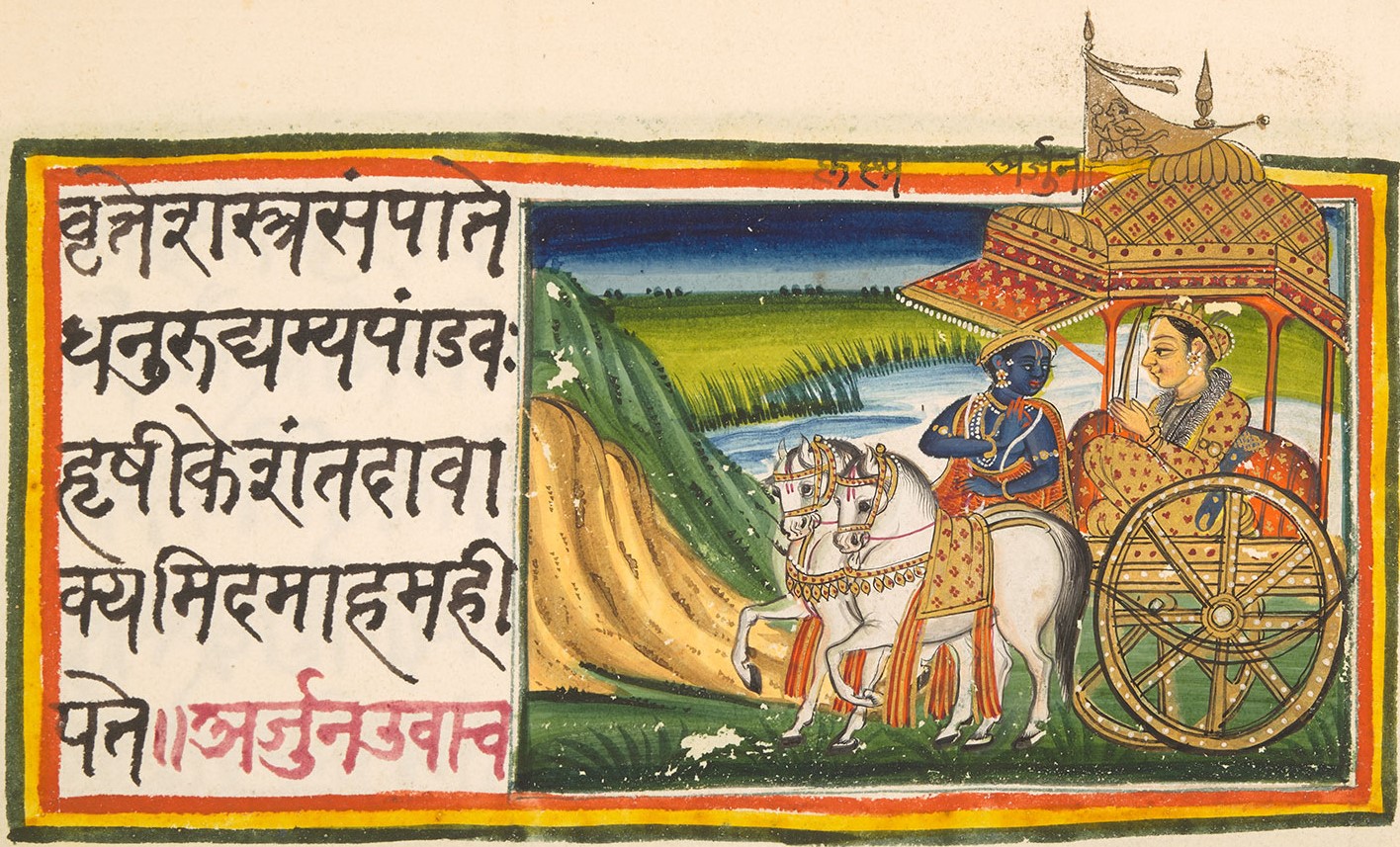
On the morning of the great war at Kurukshetra, Prince Arjuna drops his bow and arrows. He sees his teachers, cousins, and uncles arrayed in enemy ranks and refuses to fight. His charioteer Krishna reveals himself as the Supreme Divine Personality and begins an eighteen-chapter discourse that reshapes how humanity understands duty and death.
The text emerged from oral tradition before taking written form between the second century BCE and the first century CE. Composed in classical Sanskrit, it contains roughly 700 verses organized into three main paths of spiritual practice: Karma Yoga for selfless action, Bhakti Yoga for devotion, and Jnana Yoga for knowledge. The central instruction asks practitioners to perform their duties without attachment to the results.
Charles Wilkins published the first English translation in 1785, introducing the work to Western audiences. Modern readers continue to find value in its teachings on leadership and mental resilience. In November 2026, Indian politician Sonia Gandhi cited the text while navigating a personal crisis about entering politics, proving its enduring utility across centuries.
คำสำคัญ
แหล่งที่มา
ข้อมูลหนังสือ
- ผู้แต่ง
- Vyāsa
- ภาษา
- Sanskrit
- ผู้แต่ง
- Vyāsa
- ภาษา
- Sanskrit
- Verses
- 700
- Composition period
- 5th–2nd century BCE
- First English translation
- 1785 by Charles Wilkins
- Part of
- Mahabharata (Bhishma Parva, chapters 23–40)
เข้าร่วมชุมชน
แฟนกำลังพูดคุย