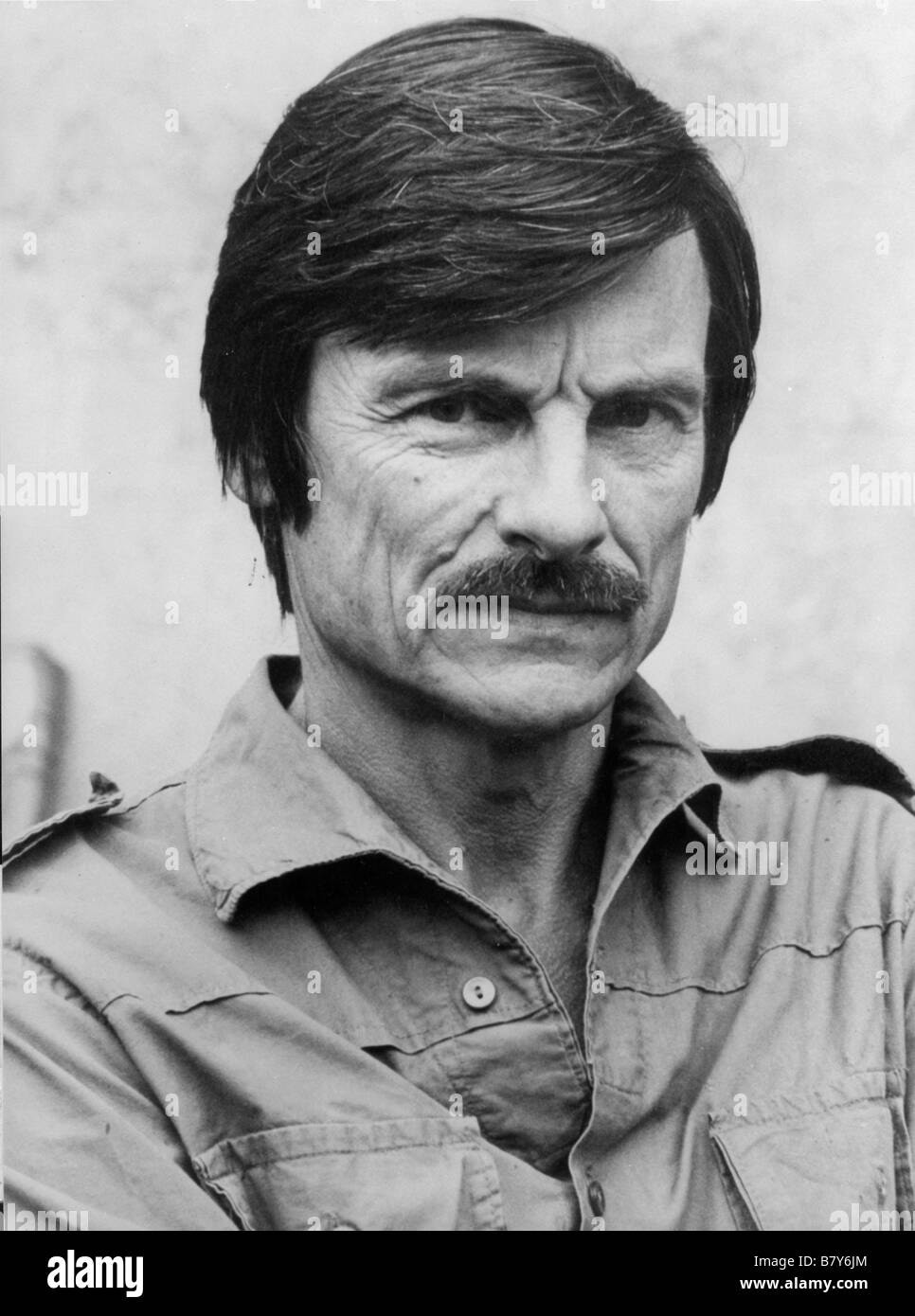
Andrei Tarkovsky
 Russia
Film director•screenwriter•film theorist
วันเกิด
April 4, 1932
ราศี
Aries
สถานที่เกิด
Zavrazhye, Ivanovo Oblast, Russian SFSR, Soviet Union
อายุ
เสียชีวิตเมื่ออายุ 54 ปี
ส่วนสูง
5 ft 9 in (175 cm)
เกี่ยวกับ
Andrei Tarkovsky was one of cinema's most revered directors, a Soviet-born artist whose seven feature films and one documentary transformed how we think about time, memory, and spirituality on screen. His work, marked by impossibly long takes, elemental imagery of rain and fire, and a deep, almost liturgical patience, feels less like storytelling and more like prayer. Films such as Stalker, Solaris, and Mirror are not just watched; they are inhabited. Today, Tarkovsky's influence spans from arthouse theaters to Hollywood auteurs like Christopher Nolan and Terrence Malick. His book Sculpting in Time remains a foundational text for filmmakers worldwide. In 2012, Sight & Sound placed three of his films on its list of the 100 greatest movies ever made, a feat matched by very few directors. Though he died in 1986, his estate, managed by his son and the Tarkovsky Foundation, continues to license his films for restoration and festival retrospectives, keeping his vision alive for new generations.
ชีวิตช่วงต้นและภูมิหลัง
ตาร์คอฟสกีเติบโตในหมู่บ้านชนบทซาฟราซเย ซึ่งอาร์เซนี ตาร์คอฟสกี ผู้เป็นพ่อซึ่งเป็นกวี มักจะไม่อยู่บ้าน พ่อแม่หย่าร้างเมื่อเขายังเด็ก เหตุการณ์ที่ทิ้งรอยแผลถาวรในภูมิทัศน์ทางอารมณ์ของเขา เขาย้ายไปมอสโกกับมารดา มาเรีย วิษเนียโควา ซึ่งเป็นนักแปล และเข้าเรียนโรงเรียนดนตรี เรียนเปียโน นอกจากนี้เขายังเรียนภาษาอาหรับที่สถาบันภาษาตะวันออก แต่ไม่รู้สึกถึงความชอบที่แท้จริง ในปี 1954 เขาเข้าเรียนที่สถาบันภาพยนตร์แห่งสหภาพ (VGIK) โรงเรียนภาพยนตร์ชั้นนำของสหภาพโซเวียต ศึกษาภายใต้ผู้กำกับชื่อดัง มิคาอิล รอมม์ รอมม์รับรู้ถึงพรสวรรค์ที่ผิดปกติของตาร์คอฟสกีและให้พื้นที่เขาพัฒนาเสียงของตัวเอง ภาพยนตร์ประกาศนียบัตรของเขา The Steamroller and the Violin (1961) หนังสั้นเกี่ยวกับเด็กชายและคนงานก่อสร้าง ชนะรางวัลที่หนึ่งในเทศกาลภาพยนตร์นักศึกษานิวยอร์ก ชัยชนะเล็กๆ นั้นเปิดประตูสู่ภาพยนตร์เรื่องยาวเรื่องแรกของเขา
ความก้าวหน้าในอาชีพ
ภาพยนตร์เรื่องยาวเรื่องแรกของตาร์คอฟสกี Ivan's Childhood (1962) ชนะรางวัล Golden Lion ที่เวนิส ทำให้เขาก้าวสู่เวทีโลกทันที ตามด้วย Andrei Rublev (1966) มหากาพย์อันยิ่งใหญ่เกี่ยวกับจิตรกรไอคอนยุคกลางที่ทางการโซเวียตเก็บไว้ห้าปี Solaris (1972) ชนะรางวัล Grand Prix Spécial ที่เมืองคานส์ แม้ว่าตาร์คอฟสกีจะปฏิเสธฉบับตัดต่อของสตูดิโอ Mirror (1975) เป็นบันทึกความทรงจำแนวทดลองที่ทำให้เซ็นเซอร์งุนงง แต่ต่อมากลายเป็นจุดสังเกต Stalker (1979) ผลักดันสไตล์ของเขาไปสู่จุดสูงสุด: การเดินทางเชิงปรัชญาที่ช้าในเขตต้องห้าม หลังจาก Stalker ตาร์คอฟสกีหนีไปทางตะวันตก สร้าง Nostalghia (1983) ในอิตาลี และ The Sacrifice (1986) ในสวีเดน The Sacrifice ชนะรางวัล Grand Prix ที่คานส์ และ BAFTA สาขาภาพยนตร์ภาษาต่างประเทศยอดเยี่ยม ในปี 1986 เขาตีพิมพ์ Sculpting in Time บทความสำคัญของเขาเกี่ยวกับภาพยนตร์ เขาเสียชีวิตด้วยโรคมะเร็งในปีเดียวกัน ซึ่งอาจรุนแรงขึ้นจากสารเคมีพิษในกองถ่าย Stalker
ไทม์ไลน์อาชีพ
ภาพลักษณ์สาธารณะและสไตล์
ตาร์คอฟสกีมักถูกเรียกว่าผู้กำกับที่มีจิตวิญญาณที่สุดในประวัติศาสตร์ภาพยนตร์ สไตล์ซิกเนเจอร์ของเขา ฉากยาวสุดขั้ว เสียงธรรมชาติ และภาพของน้ำ ไฟ และซากปรักหักพัง สร้างประสบการณ์ที่ถูกสะกดจิตและครุ่นคิด แฟนๆ ซึ่งบางครั้งเรียกว่า Tarkovskians รวมตัวกันทางออนไลน์เพื่อวิเคราะห์ทุกเฟรม และฉบับ Criterion Collection ของภาพยนตร์เขาเป็นที่หวงแหน การนำเสนอในสื่อเน้นสถานะของเขาในฐานะผู้พลีชีพต่อการเซ็นเซอร์ของโซเวียต และกวีแห่งเวลา การปรากฏตัวบนโซเชียลมีเดียของเขาดำเนินชีวิตผ่านบัญชีแฟนคลับ ซึ่งปฏิบัติต่องานของเขาด้วยความเคารพเกือบจะทางศาสนา
ชื่อเสียงและแฟนด้อม
Global attention for Andrei Tarkovsky remains steady across a century of cinematic history, anchored by the enduring influence of his seven feature films and theoretical writings. According to the iFANN Global Fame Rankings, he holds the position of the 10th most famous person from Russia, a placement that has held steady since the previous cycle. This standing reflects a consistent flow of scholarly engagement and cultural consumption rather than fleeting viral moments. While no formal organization unites his admirers, a decentralized network of cinephiles, film students, and academic circles sustains his legacy through university screenings and critical analysis. These devotees, often referred to as Tarkovsky fans or simply cinephiles, operate without the structured activism seen in modern pop culture, preferring instead to dissect the spiritual and temporal dimensions of his work. The absence of a specific moniker for this group underscores the intellectual nature of their reverence, which focuses on the preservation of his films via institutions like The Criterion Collection rather than commercial campaigns. His status as a poet of time ensures that his image persists not through celebrity gossip but through the quiet, profound realization experienced by viewers encountering his slow pacing and elemental imagery.
เรื่องน่าสนใจและตำนาน
Before dedicating himself to cinema, Tarkovsky studied Arabic and music, disciplines that informed his later visual rhythms. He famously refused to watch his own completed films, asserting they belonged entirely to the audience. His father's poetry is recited within both Mirror and Nostalghia, weaving personal history into the narrative fabric. During production, he was a heavy smoker who consumed strong black tea constantly. He named his dog Pata after a character in Nostalghia and once stated that if forced to save only one film from destruction, he would choose Mirror. Beyond these biographical details, a persistent legend surrounds his forced exile from the Soviet Union; denied permission to film about Tolstoy, he left the country under political pressure to direct Nostalghia in Italy, cementing his image as an artist defying totalitarianism. Another widely retold story concerns his final resting place: although he wished to be buried near his mother in Nice, France, his body remained there until 2009, when a long legal struggle finally allowed his family to inter him at Moscow's Novodevichy Cemetery.
คำพูดที่โดดเด่น
“The allotted function of art is not, as is often assumed, to put across ideas, to propagate thoughts, to serve as an example. The aim of art is to prepare a person for death, to plough and harrow his soul, rendering it capable of turning to good.”
“The cinema is an art form that is not about something, it is something.”
“I am interested in the inner world of a person, and it is quite natural that the cinema, which is capable of penetrating into the deepest recesses of the human soul, should be the art form that can express the most intimate experiences.”
“The film is not a sequence of images, but a sequence of time.”
“I don't make films for the audience. I make them for myself. If the audience likes them, that's fine.”
ครอบครัวและชีวิตส่วนตัว
พ่อของตาร์คอฟสกี อาร์เซนี ตาร์คอฟสกี เป็นกวีที่มีชื่อเสียง ผลงานของเขาปรากฏในภาพยนตร์ของลูกชาย มารดาของเขา มาเรีย วิษเนียโควา เป็นนักแปลที่เลี้ยงดูเขาหลังจากการหย่าร้าง เขามีลูกชายสองคน: อาร์เซนี (เกิดปี 1962) กับภรรยาคนแรก อิร์มา เราช์ และมิคาอิล (เกิดปี 1971) กับภรรยาคนที่สอง ลาริซา ตาร์คอฟสกายา มิคาอิลเป็นนักเขียนและนักอนุรักษ์ที่อาศัยอยู่ในไซบีเรีย สภาพแวดล้อมทางจิตวิญญาณและปัญญาของครอบครัวมีอิทธิพลอย่างลึกซึ้งต่อวิสัยทัศน์ทางศิลปะของตาร์คอฟสกี
ความเชื่อมโยงที่โดดเด่น
ผู้ร่วมงานสำคัญของตาร์คอฟสกี ได้แก่ พ่อของเขา กวีอาร์เซนี ตาร์คอฟสกี ซึ่งบทกวีปรากฏใน Mirror และ Nostalghia; ครูของเขา มิคาอิล รอมม์; ผู้กำกับภาพ จอร์จี เรอร์เบิร์ก (Mirror, Stalker) และวาดิม ยูซอฟ (Ivan's Childhood, Andrei Rublev); คีตกวี เอดูอาร์ด อาร์เตมีเยฟ (Solaris, Mirror, Stalker); และนักแสดง อานาโตลี โซโลนิตซิน, มาร์การิตา เตเรโควา และเออร์ลันด์ โจเซฟสัน
ความสัมพันธ์และประวัติการคบหา
Tarkovsky แต่งงานกับนักแสดงสาว Irma Raush ในปี 1957 เธอแสดงในหนังสั้นเรื่อง The Steamroller and the Violin และ Ivan's Childhood ทั้งคู่มีลูกชายชื่อ Arseny ในปี 1962 และหย่าร้างกันในปี 1970 ปีเดียวกันนั้น เขาแต่งงานกับ Larisa Kizilova (ต่อมาคือ Tarkovskaya) ซึ่งทำงานเป็นผู้ควบคุมบทและบรรณาธิการให้กับทุกเรื่องตั้งแต่ Mirror เป็นต้นไป พวกเขามีลูกชายชื่อ Mikhail ในปี 1971 Tarkovsky อยู่กับ Larisa จนกระทั่งเสียชีวิตในปี 1986 เธอเสียชีวิตในปี 1998
- แต่งงานแล้วIrma Raush1957 - 1970แต่งงานในปี 1957; เธอแสดงในภาพยนตร์ยุคแรกของเขา; มีลูกชายหนึ่งคนชื่อ Arseny; หย่าร้างในปี 1970
- แต่งงานแล้วLarisa Tarkovskaya1970 - 1986แต่งงานในปี 1970; เธอทำงานเป็นผู้ควบคุมบทและบรรณาธิการให้กับทุกเรื่องตั้งแต่ Mirror เป็นต้นไป; มีลูกชายหนึ่งคนชื่อ Mikhail; อยู่ด้วยกันจนกระทั่งเขาเสียชีวิต
การเสียชีวิตและผลที่ตามมา
เสียชีวิต
December 29, 1986 (อายุ 54 ปี)
สถานที่เสียชีวิต
Paris, Île-de-France, France
สาเหตุการเสียชีวิต
Lung cancer complications
Andrei Arsenyevich Tarkovsky passed away on December 29, 1986, in Paris, France, following a long struggle with lung cancer that had been confirmed by medical professionals prior to his death. The director had traveled to the French capital earlier that year to undergo surgery for the condition after being denied permission to remain in the Soviet Union due to his political stance and the controversial nature of his films. His final public appearance is generally considered to be the completion of his last film, The Sacrifice (Offret), which premiered at Cannes in May 1986, after which he continued post-production work while his health declined until his passing. Public reaction within the international cinema community was marked by widespread mourning, with tributes pouring in from peers and institutions who recognized him as one of the greatest directors in history.
Although immediate large-scale fan vigils were limited by the geopolitical context of the late Soviet era, the decades following his death saw an exponential growth in his influence, leading to numerous retrospectives and academic studies. His funeral took place on January 3, 1987, in Paris as a private affair attended by close friends, family, and colleagues, including his wife Larisa Tarkovskaya and his son Andrey Tarkovsky Jr., where he was cremated and his ashes interred at the Cimetière de Montmartre. Posthumously, Tarkovsky's estate has been managed by his family to ensure the preservation and distribution of his works, with several films receiving critical re-evaluations and restorations.
มูลค่าทรัพย์สิน (มูลค่ามรดก)
$1.5 Million
การประเมินโดยทีมบรรณาธิการ iFANN
Since Andrei Tarkovsky passed away, his net worth represents the current value of his estate. No official public figure manages the assets directly, but the estate, overseen by his son Mikhail and the Tarkovsky Foundation, generates steady revenue through royalties from his seven feature films, streaming agreements with the Criterion Channel and Kanopy, home video sales including Criterion Collection box sets, and licensing for festival screenings. Income also flows from his book Sculpting in Time and published diaries such as Time Within Time. Per iFANN's editorial analysis, the estate is estimated at approximately $1.5 million as of 2026, based on modest but consistent earnings from classic film rights and intellectual property.
รางวัลที่ได้รับ (28)
Tarkovsky ได้รับรางวัล Golden Lion จากเวนิสสำหรับ Ivan's Childhood และรางวัล Grand Prix Spécial สำหรับ Solaris จากคานส์ ภาพยนตร์เรื่องสุดท้ายของเขา The Sacrifice ได้รับรางวัล Grand Prix จากคานส์และ BAFTA สาขาภาพยนตร์ภาษาต่างประเทศยอดเยี่ยม นอกจากนี้เขายังได้รับรางวัล Special Jury Prize จากเวนิสสำหรับ Andrei Rublev และรางวัลผู้กำกับยอดเยี่ยมจากคานส์ร่วมสำหรับ Nostalghia ในปี 1990 เขาได้รับรางวัล Lenin Prize หลังเสียชีวิต ซึ่งเป็นหนึ่งในเกียรติยศสูงสุดของสหภาพโซเวียต
1988 · ภาพยนตร์ภาษาต่างประเทศยอดเยี่ยม
The Sacrifice
1987 · สำหรับ The Sacrifice
เป็นที่รู้จักจาก
Stalker
1979 · Director, Screenwriter
Solaris
1972 · Director, Screenwriter
Andrei Rublev
1966 · Director, Screenwriter
Mirror
1975 · Director, Screenwriter
The Sacrifice
1986 · Director, Screenwriter
คำสำคัญ
ข้อมูลโดยย่อ
- อาชีพ
- Film director, screenwriter, film theorist
- เกิด
- April 4, 1932
- สถานที่เกิด
- Zavrazhye, Ivanovo Oblast, Russian SFSR, Soviet Union
- เสียชีวิต
- December 29, 1986
- สถานที่เสียชีวิต
- Paris, France
- เพศ
- ชาย
- ส่วนสูง
- 5 ft 9 in (175 cm)
- คู่สมรส
- Irma Raush (1957–1970), Larisa Tarkovskaya (1970–1986)
- Children
- 2 sons: Arseny and Mikhail
- Education
- All-Union State Institute of Cinematography (VGIK)
- ราศี
- Aries
ข้อมูลส่วนตัว
- ชื่อเต็ม
- Andrei Arsenyevich Tarkovsky
- ส่วนสูง
- 5 ft 9 in (175 cm)
- คู่สมรส
- Irma Raush (1957–1970), Larisa Tarkovskaya (1970–1986)
- บุตร
- Arseny Tarkovsky (born 1962), Mikhail Tarkovsky (born 1971)
- การศึกษา
- All-Union State Institute of Cinematography (VGIK), studied under Mikhail Romm
ผลงานภาพยนตร์
8
รวม
7
ภาพยนตร์
0
ทีวี
คำถามที่พบบ่อย
Andrei Tarkovsky เสียชีวิตตอนอายุเท่าไหร่?
มูลค่าทรัพย์สินของ Andrei Tarkovsky คือเท่าไหร่?
Andrei Tarkovsky มีลูกไหม?
ภาพยนตร์ที่โด่งดังที่สุดของ Andrei Tarkovsky คือเรื่องอะไร?
Andrei Tarkovsky เป็นคนเคร่งศาสนาหรือไม่?
เข้าร่วมชุมชน
แฟนกำลังพูดคุย