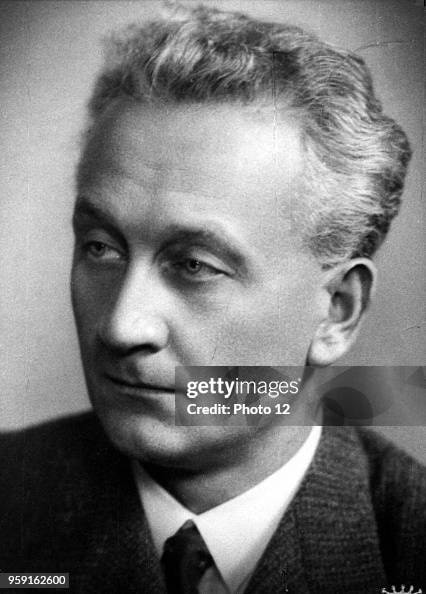
Albert Szent-Györgyi
 Hungary
นักชีวเคมี
วันเกิด
September 16, 1893
ราศี
Virgo
สถานที่เกิด
Budapest, Kingdom of Hungary, Austria-Hungary
อายุ
เสียชีวิตเมื่ออายุ 93 ปี
เกี่ยวกับ
Albert Szent-Györgyi เป็นที่รู้จักในฐานะนักชีวเคมีชาวฮังการีที่การค้นพบของเขาได้เปลี่ยนแปลงชีววิทยาระดับเซลล์และโภชนาการอย่างสิ้นเชิง เขามีชื่อเสียงที่สุดจากการได้รับรางวัลโนเบลสาขาสรีรวิทยาหรือการแพทย์ในปี 1937 จากการแยกวิตามินซีและอธิบายกระบวนการออกซิเดชันทางชีวภาพ ผลงานของเขาเกี่ยวกับวงจรกรดซิตริกและการหดตัวของกล้ามเนื้อ—การระบุแอคติน ไมโอซิน และบทบาทของ ATP—ยังคงเป็นพื้นฐาน เขาตีพิมพ์บทความหลายร้อยชิ้นและหนังสือหลายเล่ม รวมถึง On Oxidation, Fermentation, Vitamins, Health, and Disease และ The Living State งานวิจัยช่วงหลังของเขามุ่งเน้นไปที่ชีวฟิสิกส์ของมะเร็งและอนุมูลอิสระ เขาเสียชีวิตเมื่อวันที่ 22 ตุลาคม 1986 ขณะอายุ 93 ปี ทิ้งมรดกไว้ในฐานะหนึ่งในนักชีวเคมีที่รอบรู้มากที่สุดแห่งศตวรรษที่ 20 การค้นพบของเขายังคงมีอิทธิพลต่อชีวเคมี โภชนาการ และการวิจัยมะเร็งทั่วโลก
ชีวิตช่วงต้นและภูมิหลัง
Szent-Györgyi เกิดที่บูดาเปสต์เมื่อวันที่ 16 กันยายน 1893 เป็นบุตรชายคนที่สองของ Miklós Szent-Györgyi เจ้าของที่ดิน และ Jozefina Lenhossék นักดนตรี ลุงของเขา Mihály Lenhossék นักสรีรวิทยาที่มีชื่อเสียง กลายเป็นบุคคลสำคัญในวัยเด็กของเขาและเป็นแรงบันดาลใจให้เขาสนใจวิทยาศาสตร์ เขาบรรยายตัวเองว่าเป็นเด็กที่เรียนรู้ช้า เกลียดหนังสือ และมักต้องการครูสอนพิเศษ แต่เมื่ออายุสิบหกปี จู่ๆ เขาก็มีความกระหายในความรู้และจบมัธยมปลายด้วยเกียรตินิยม เขาเข้าเรียนที่ Budapest Medical School ในปี 1911 แต่พบว่าหลักสูตรแพทย์น่าเบื่อและหันไปหาห้องปฏิบัติการกายวิภาคของลุง สงครามโลกครั้งที่ 1 ขัดจังหวะการศึกษาของเขาในปี 1914 เมื่อเขาเริ่มรับราชการเป็นแพทย์ทหาร หลังจากอยู่ในสนามเพลาะสองปี เขาเบื่อหน่ายสงคราม จึงยิงตัวเองที่กระดูกต้นแขนซ้าย อ้างว่าถูกศัตรูยิง และถูกส่งกลับบูดาเปสต์ ขณะที่แขนของเขาหายดี เขาก็เรียนแพทย์จบ ได้รับปริญญาแพทยศาสตร์ในปี 1917 จาก Semmelweis University หลังสงคราม เขาทำงานกับนักเภสัชวิทยา G. Mansfeld ใน Pozsony นักสรีรวิทยาไฟฟ้า Armin von Tschermak ในปราก นักชีวเคมี L. Michaelis ในเบอร์ลิน และศึกษาเคมีฟิสิกส์ในฮัมบูร์ก ไลเดน และเคมบริดจ์ ต่อมาเขาได้รับปริญญาเอกจาก University of Cambridge
ความก้าวหน้าในอาชีพ
ในช่วงทศวรรษ 1920 Szent-Györgyi เริ่มการทดลองเกี่ยวกับการเกิดสีน้ำตาลของพืช โดยแยกสารที่เขาเรียกว่ากรดเฮกซูโรนิกจากน้ำส้ม ในปี 1932 เขาทำงานร่วมกับ Joseph Svirbely และยืนยันว่ากรดเฮกซูโรนิกคือวิตามินซี โดยแสดงฤทธิ์ต้านโรคลักปิดลักเปิดในหนูตะเภา เขาใช้พริกหยวกจากเซเกดเพื่อผลิตกรดแอสคอร์บิกบริสุทธิ์สามปอนด์ การค้นพบนี้ทำให้เขาได้รับรางวัลโนเบลสาขาสรีรวิทยาหรือการแพทย์ในปี 1937 เขายังระบุกรดฟูมาริกและส่วนประกอบอื่นๆ ของวงจรกรดซิตริก และไขพื้นฐานโมเลกุลของการหดตัวของกล้ามเนื้อ โดยระบุแอคติน ไมโอซิน และบทบาทของ ATP ในช่วงสงครามโลกครั้งที่ 2 เขามีบทบาทในขบวนการต่อต้านของฮังการี ว่ากันว่า Adolf Hitler สั่งจับกุมเขา ทำให้เขาต้องหลบซ่อน หลังสงคราม เขาอพยพไปยังสหรัฐอเมริกาในปี 1947 ทำงานที่ Marine Biological Laboratory ใน Woods Hole และ National Institutes of Health เขากลายเป็นพลเมืองสหรัฐฯ เคยเป็นศาสตราจารย์รับเชิญที่ Harvard ในปี 1936 และศาสตราจารย์ Franchi ที่ University of Liège ในปี 1938 และได้รับรางวัล Albert Lasker Award for Basic Medical Research ในปี 1954 ต่อมาเขาสำรวจชีวฟิสิกส์ของมะเร็งและอนุมูลอิสระ ร่วมก่อตั้ง National Foundation for Cancer Research เขาได้รับรางวัล Cameron Prize for Therapeutics จาก University of Edinburgh ในปี 1946
ไทม์ไลน์อาชีพ
ภาพลักษณ์สาธารณะและสไตล์
Szent-Györgyi ถูกจดจำในฐานะหนึ่งในนักชีวเคมีที่รอบรู้และมีอิทธิพลมากที่สุดแห่งศตวรรษที่ 20 เพื่อนร่วมงานบรรยายว่าเขามีพลังและเสน่ห์อย่างล้นเหลือ มีความน่าหลงใหลและความเอื้อเฟื้อเผื่อแผ่ผสมกับความเห็นแก่ตัวและการพยาบาท เขาเป็นที่รู้จักในฐานะคนที่เก่งและตื่นเต้นในห้องปฏิบัติการ มรดกของเขาได้รับการยกย่องในชุมชนชีวเคมี โภชนาการ และการวิจัยมะเร็ง National Foundation for Cancer Research ซึ่งเขาร่วมก่อตั้ง ยังคงรักษาความทรงจำและภารกิจของเขา ไม่มีชื่อแฟนด้อมอย่างเป็นทางการ แต่การค้นพบของเขาถูกสอนในตำราเรียนทั่วโลก เขาได้รับปริญญาดุษฎีบัณฑิตกิตติมศักดิ์จากหลายมหาวิทยาลัยและเป็นสมาชิกของสังคมวิชาการและวิทยาศาสตร์ที่มีชื่อเสียงที่สุด รวมถึง Pontifical Academy of Sciences
ชื่อเสียงและแฟนด้อม
Albert Szent-Györgyi currently holds no placement in the published Global Top 1,000 rankings or any Top-100 scope list within the iFANN system. The Global Fame Engine has evaluated his standing as of August 2026 and determined that he does not currently occupy a ranked position among the world's most famous figures. While his name carries immense weight in academic circles, he lacks a formal fanbase with an official designation, organized rituals, or public campaigns typical of modern celebrity culture. His legacy is sustained through scientific institutions, the Albert Szent-Györgyi Prize for cancer research, and the continued operation of the medical school bearing his name at the University of Szeged rather than through a devoted following of enthusiasts. There are no documented instances of street shutdowns, viral folklore, or fan-funded tributes dedicated to him. The narrative surrounding his life remains strictly within the realm of verified historical achievement and biographical anecdote, lacking the performative mythology often associated with pop icons.
เรื่องน่าสนใจและตำนาน
He famously shot himself in the arm to avoid combat during World War I, later describing a mad desire to return to science. To isolate vitamin C more efficiently than citrus allowed, he utilized paprika due to its lower sugar content, which facilitated easier crystallization. During the Nazi occupation, he actively assisted Jewish friends in fleeing Hungary. A fervent antiwar activist throughout his life, he recounted discovering vitamin C in paprika by accident after deciding not to eat it: "I thought of a way out... Suddenly it occurred to me that this is the one plant I had never tested." He maintained a rigorous daily routine of running three kilometers before dawn, a habit that became part of his popular image alongside his quote on innovation. His papers reside in the National Library of Medicine's Profiles in Science collection. Legends also persist regarding the University of Georgia missing a Nobel Prize due to a misunderstanding involving his cats, adding a layer of institutional intrigue to his biography beyond pure science.
คำพูดที่โดดเด่น
“I was overcome with such a mad desire to return to science that one day I grabbed my revolver and in my despair put a shot through my upper arm.”
“I did not feel like eating it, so I thought of a way out. Suddenly it occurred to me that this is the one plant I had never tested. I took it to the laboratory… and by about midnight I knew that it was a treasure chest full of vitamin C.”
ครอบครัวและชีวิตส่วนตัว
Szent-Györgyi เป็นบุตรชายคนที่สองของ Miklós Szent-Györgyi เจ้าของที่ดินและนักธุรกิจจากตระกูลที่มีบรรดาศักดิ์ ซึ่งบริหารที่ดินขนาดใหญ่ห่างจากบูดาเปสต์ประมาณห้าสิบไมล์ และ Jozefina Lenhossék นักดนตรีที่มีพรสวรรค์ ลุงทางฝ่ายแม่ของเขา Mihály Lenhossék เป็นนักสรีรวิทยาที่มีชื่อเสียงและศาสตราจารย์ที่ University of Budapest ซึ่งเป็นแรงบันดาลใจในอาชีพวิทยาศาสตร์ของเขา ครอบครัวของเขามีนักวิทยาศาสตร์สามรุ่น แม่ของเขาเคยออดิชั่นกับ Gustav Mahler ซึ่งบอกให้เธอแต่งงานแทน พี่ชายของเขา Pál กลายเป็นนักไวโอลินมืออาชีพ และ Szent-Györgyi เองก็เป็นนักเปียโนที่มีพรสวรรค์ เขาแต่งงานสี่ครั้ง: กับ Kornélia Demény ในปี 1917 (หย่า 1938) มีลูกสาวหนึ่งคนชื่อ Cornelia เกิดในเดือนตุลาคม 1918; กับ Márta Borbíró ในปี 1941 (เป็นหม้าย 1963); กับ June Susan Wichterman ในปี 1965 (หย่า 1968); และกับ Marcia Houston ในปี 1975 ซึ่งยังมีชีวิตอยู่เมื่อเขาเสียชีวิตในปี 1986
ความเชื่อมโยงที่โดดเด่น
Szent-Györgyi ทำงานร่วมกับ Joseph Svirbely อย่างใกล้ชิดเพื่อยืนยันตัวตนของวิตามินซี Mihály Lenhossék ลุงของเขาซึ่งเป็นนักสรีรวิทยาเป็นผู้ให้คำปรึกษา Norman Haworth กำหนดโครงสร้างของวิตามินซี และได้รับรางวัลโนเบลสาขาเคมีร่วมกันในปี 1937 Charles King เป็นคู่แข่งในการแยกวิตามินซี Szent-Györgyi ร่วมมือกับ G. Mansfeld, Armin von Tschermak และ L. Michaelis ที่สถาบันต่างๆ ในยุโรป
ความสัมพันธ์และประวัติการคบหา
Szent-Györgyi แต่งงานสี่ครั้ง การแต่งงานครั้งแรกกับ Kornélia Demény ลูกสาวของนายไปรษณีย์เอกแห่งฮังการี ในปี 1917; มีลูกสาวหนึ่งคนชื่อ Cornelia เกิดในปี 1918 และหย่าร้างในปี 1938 ในปี 1941 เขาแต่งงานกับ Márta Borbíró; เธอเสียชีวิตในปี 1963 จากนั้นเขาแต่งงานกับ June Susan Wichterman ในปี 1965 หย่าร้างในปี 1968 การแต่งงานครั้งสุดท้ายกับ Marcia Houston ในปี 1975 ซึ่งคงอยู่จนกระทั่งเขาเสียชีวิตในปี 1986 เขาเป็นหม้ายเมื่อเสียชีวิต
- แต่งงานแล้วKornélia Demény1917 - 1938ลูกสาวของนายไปรษณีย์เอกแห่งฮังการี; มีลูกสาวหนึ่งคนชื่อ Cornelia; หย่าร้าง
- แต่งงานแล้วMárta Borbíró1941 - 1963เธอเสียชีวิตในปี 1963
- แต่งงานแล้วJune Susan Wichterman1965 - 1968หย่าร้างในปี 1968
- แต่งงานแล้วMarcia Houston1975 - 1986แต่งงานจนกระทั่งเขาเสียชีวิต
การเสียชีวิตและผลที่ตามมา
เสียชีวิต
October 22, 1986 (อายุ 93 ปี)
สถานที่เสียชีวิต
ไม่ทราบ
สาเหตุการเสียชีวิต
ไม่ทราบ
Albert Szent-Györgyi died on October 22, 1986, at the Marine Biological Laboratory in Woods Hole, Massachusetts. While he remained active in scientific discourse until his final years, the circumstances surrounding his end were marked by quietude rather than public ceremony. Tributes from the international scientific community acknowledged his foundational contributions to biochemistry, particularly regarding vitamin C and muscle physiology. The National Foundation for Cancer Research, an organization he co-founded, continued its operations without interruption following his death, maintaining the legacy of his later work on cancer biophysics. The Albert Szent-Györgyi Prize, established to honor outstanding research in free radicals and oxidative stress, remains a recurring distinction within the scientific field, serving as a lasting institutional memory of his influence.
มูลค่าทรัพย์สิน (มูลค่ามรดก)
$1 Million
การประเมินโดยทีมบรรณาธิการ iFANN
As a scientist who died in 1986, Szent-Györgyi's net worth was modest, typical of an academic researcher. His estate value is not publicly documented. He co-founded the National Foundation for Cancer Research, which continues to operate. His scientific papers and discoveries generate ongoing recognition but no significant financial royalties. There are no publicly available figures for ongoing estate earnings, royalties, or licensing deals. Per iFANN's editorial analysis, his net worth in 2026 is estimated at $1 Million, reflecting his modest lifestyle and the enduring value of his intellectual legacy.
รางวัลที่ได้รับ (4)
Szent-Györgyi ได้รับรางวัลโนเบลสาขาสรีรวิทยาหรือการแพทย์ในปี 1937 จากการค้นพบเกี่ยวกับปฏิกิริยาออกซิเดชันทางชีวภาพและวิตามินซี นอกจากนี้เขายังได้รับรางวัล Cameron Prize for Therapeutics จากมหาวิทยาลัยเอดินบะระในปี 1946 และรางวัล Albert Lasker Award for Basic Medical Research ในปี 1954 ระหว่างสงครามโลกครั้งที่ 1 เขาได้รับเหรียญเงินแห่งความกล้าหาญทางทหาร
1937 · สรีรวิทยาหรือการแพทย์
Discoveries concerning biological oxidation processes and the isolation of vitamin C
1946 · การบำบัดรักษา
เป็นที่รู้จักจาก
Isolation of vitamin C
1932 · ผู้ค้นพบ
Citric acid cycle components
1935 · นักวิจัย
Muscle contraction mechanism (actin, myosin, ATP)
1940 · ผู้ค้นพบ
คำสำคัญ
แหล่งที่มา
ข้อมูลโดยย่อ
- อาชีพ
- biochemist
- เกิด
- +1893-09-16
- สถานที่เกิด
- Budapest
- เสียชีวิต
- +1986-10-22
- สถานที่เสียชีวิต
- Woods Hole
- เพศ
- ชาย
- คู่สมรส
- Kornélia Demény, Márta Borbíró, June Susan Wichterman, Marcia Houston
- ราศี
- Virgo
ข้อมูลส่วนตัว
- ชื่อเต็ม
- Albert Imre Szent-Györgyi de Nagyrápolt
- คู่สมรส
- Kornélia Demény, Márta Borbíró, June Susan Wichterman, Marcia Houston
- บุตร
- Cornelia Szent-Györgyi
- การศึกษา
- MD from Semmelweis University (1917); PhD from University of Cambridge
คำถามที่พบบ่อย
Albert Szent-Györgyi ค้นพบวิตามินซีได้อย่างไร?
Albert Szent-Györgyi แต่งงานหรือไม่?
Albert Szent-Györgyi ได้รับรางวัลโนเบลจากอะไร?
Albert Szent-Györgyi เสียชีวิตเมื่ออายุเท่าไร?
Albert Szent-Györgyi มีลูกหรือไม่?
เข้าร่วมชุมชน
แฟนกำลังพูดคุย