FTC lawsuit Amazon fake bidder
โดย Huda Thomas: Amazon
Amazon got exposed for planting a fake bidder in its own auction to secretly overcharge 500,000 small businesses. And the businesses had no way to ever see it happening. The FTC and a coalition of states sued Amazon this week, and the complaint lays out a7-year scheme with Amazon's own people describing it in writing. Here's what Amazon told advertisers they were buying: A clean second-price auction. You bid, and if you win, you pay one cent more than the next highest bidder. The fairest kind of auction there is, right? But what Amazon actually built: Starting in 2019, it slipped a hidden markup into the auction that its own staff called a "soft reserve price." Then it added a bidder that did not EXIST. One Amazon Ads executive admitted in writing that the price advertisers pay "isn't set by an actual bidder." It's a "proxy 2nd price that we calculate." Another internal document calls it an "invented auction participant." The FTC calls that what it is: A shill bid. So the "next highest bidder" businesses were paying to beat was often Amazon itself. The bidder was made up. Amazon dropped it into its own auction to push your price up. And it worked exactly as designed. By 2021, advertisers paid their own maximum bid about 30 to 40% of the time. By 2024, that number hit roughly 80%. The auction had turned into a machine that charged you the most you were ever willing to pay. Amazon's own staff were blunt about why: A 2024 exchange between the head of Amazon Ads and the company's chief economist called it a "clever non-transparent way to charge first price." One line admits the whole thing flat out: "The benefit to Amazon comes at the cost of advertisers." And they knew it had to stay hidden. Internal messages warned that revealing it would cause "irrevocable damage to advertiser trust." When advertisers asked Amazon directly whether the auction had changed, the company literally gave them false answers. More than $20 billion later, 1.2 million advertisers had paid the surcharge. Over 500,000 of them were small and medium businesses. Now here's what made this scheme unstoppable: In a real auction you catch overpayment by looking at the losing bids. But Amazon's advertisers can NEVER see the losing bids. The one number that would expose the entire scheme is the one number only Amazon can see. So Amazon never had to hide the scheme. The blind spot it built into its own system did the hiding for it. And Amazon isn't only running the auction… It calculates the second price, sets the reserve, sees every bid, and it sells its own products in the same auction it runs. So the number every advertiser trusted as the going rate was a figure Amazon computed in private. The half a million small businesses couldn't even walk away. Amazon is where the buyers are, so leaving means losing the customers. Even the ones who suspected something just kept paying. Now Amazon says the case is misguided. It argues advertisers bid based on the results they actually get, not on descriptions of auction mechanics, that the average winning bid fell by half from 2019 to 2024, and that relevancy improvements saved advertisers billions. Those are real arguments, and a jury will hear them. But it was Amazon's own executives, in Amazon's own documents, who called it a shill bid and a non-transparent way to charge more. You don't write "the benefit comes at the cost of advertisers" about a system you think is fair. What do you think?
คำบรรยาย (en)
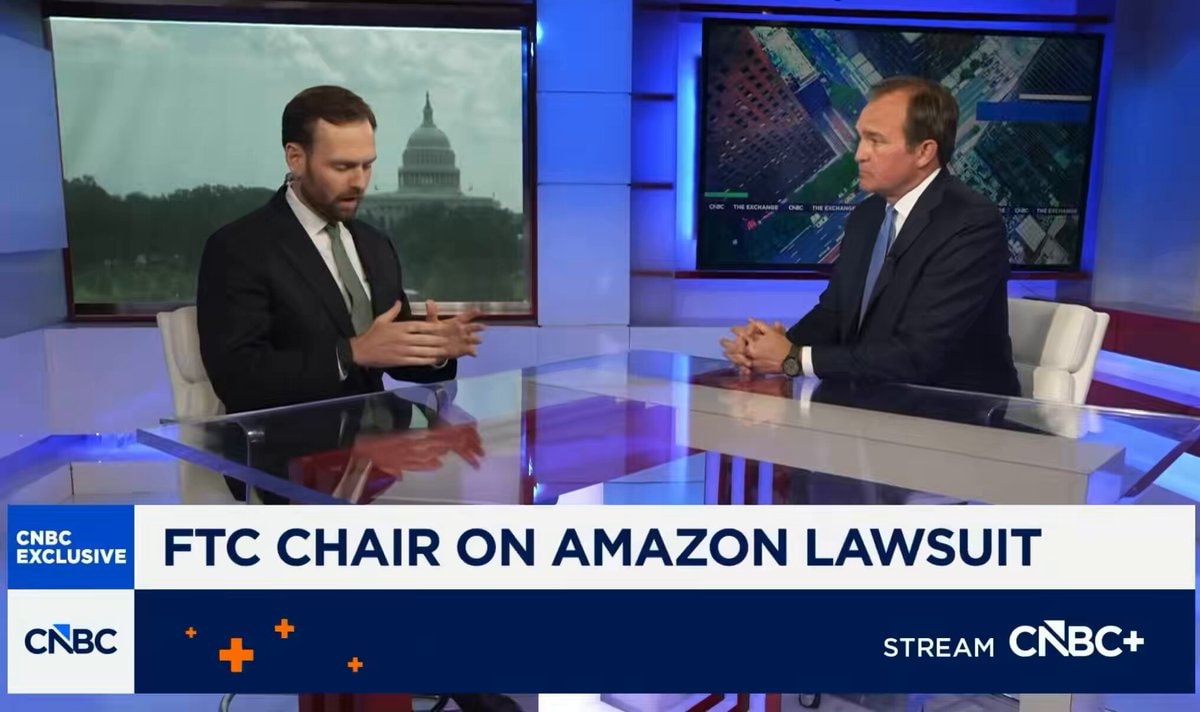
The FTC in 22 states and then another state, Texas, filed their own lawsuit alongside ours, alleged that Amazon runs an auction for advertising on Amazon's website. That's how all advertising is done online, are instantaneous auctions. And that Amazon was representing to customers that it was running a particular type of auction that would result in people paying particular types of prices. What we found after an extensive multi-year investigation is that that wasn't true, is that they were setting surcharge fees that they weren't telling any of the advertisers about that were higher than the fees that the advertisers thought they would actually pay based on what Amazon had been telling them. And that as a result, Amazon from 2018 to 2025 got tens of billions of dollars in additional profit taken from the advertisers that the advertisers did not understand was happening. And ultimately, do you think that those rates would have trickled down to the Amazon customer, that there was consumer harm based on your allegations. Yeah, we do. I mean, look, marketing budgets for all companies are a big input into the total cost of selling goods. But particularly for small businesses, this can be like a pretty serious chunk of their total cost of selling goods for the year. And that means consumers were almost certainly seeing higher prices as a result of Amazon taking this profit out of the pockets of these advertisers. Yeah.