
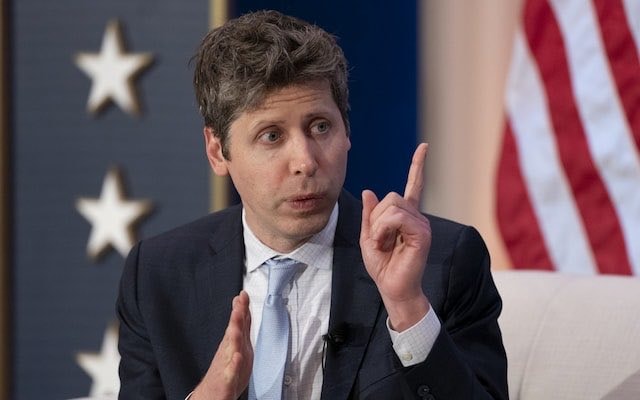
@tim_officialThere's a messy situation unfolding in the math world that involves OpenAI, a $1 million prize, and a whole lot of accusations about who actually solved a major problem. So here's the story: an NYU professor, Tristan Buckmaster, and mathematician Levent Alpöge spent about a year working on the Navier-Stokes equations, one of the seven Millennium Prize problems with a $1 million bounty from the Clay Mathematics Institute. The question itself dates back to 1934, when Jean Leray first posed it. They finally cracked it on August 15 and had it verified in Lean by August 22. But here's where it gets weird: Buckmaster says he paid OpenAI out of his own pocket for the tools they used, saying, "I pay for the tools my group uses out of my own research funds, including footing a large bill to OpenAI." All their drafts went through Codex. Then OpenAI's math team, led by Sébastien Bubeck, caught wind of their progress. Bubeck claims they started training a new model on August 28 after hearing rumors, and by Sunday morning they had the solution, fully formalized in Lean. That effort supposedly cost around $22.5 million, based on 300 billion output tokens at OpenAI's published rates. So two guys spend a year on this, and then Buckmaster says he gets a call from Bubeck with two options: either they co-publish with OpenAI, who would claim they were the closest humans to the solution, or Buckmaster publishes alone, takes the prize, and credits an internal OpenAI model. But there was a catch: Bubeck allegedly said Alpöge had to be removed from the paper because it was "so annoying" that he works at Anthropic. Buckmaster refused both options and said he'd go public. Bubeck then supposedly asked, "Why would you ruin your career?" and added, "If you don't want me to be nice, then I don't have to be nice." Bubeck denies all of this, calling the allegations false and inflammatory. Sam Altman has his own version of events. In a press briefing, Bubeck said no researcher or agent saw the work before it was published and that they didn't use the pair's prompts or proofs. But Buckmaster says he was told on that call that there was very little human input, which turned out to be false. Corrections kept coming in over OpenAI's internal chat, revealing that an entire team had been working on it. Buckmaster's big question was whether the model had been trained on their Codex sessions. He says he was told the model didn't look up user data, but when he asked again about training, he didn't get a straight answer. OpenAI's own written statement says it can't rule out that de-identified data from their products helped improve their models. And Bubeck even conceded that OpenAI's approach to the problem was similar to the one the two mathematicians were using. So you've got a paying customer who put a year of unpublished work into a vendor's tool, and then that vendor took a similar path to the same problem, and can't say for sure the customer's data didn't help. Anyone who's ever pasted something into these tools probably understands the discomfort here. Buckmaster is in a position to fight back, he's tenured, he has a platform, and the math community is behind him. Most people wouldn't have that leverage. So who do you believe in this one, Buckmaster or OpenAI?
ดูโพสต์ต้นฉบับ










ยังไม่มีความคิดเห็น มาเป็นคนแรกกันเถอะ!